Google Website Translator Gadget

Sunday, June 19, 2011

Indian firm profits from SA coal waste with green tech


June18, 2011 20:27
By JIM JONES, Business Times

''Where there's muck there's brass." That saying from industrial England is as true for today's SA as it was to England in Victorian times.

These days the brass comes from clearing and reprocessing old muck to recover products that can be exported.

A privately owned Indian company, Osho Coal, is clearing old colliery waste dumps to recover and export so-called "off-spec" coal to Asian markets. Osho's dump-clearing operations in KwaZulu-Natal are not only removing environmental pollutants, but also helping to support smaller haulage operators.

Benefits include removing discards that spontaneously combust and spew carbon and sulphur dioxide into the atmosphere or that leach acids.

Osho MD Tushar Agrawal said the company's annual exports had risen from 200000 tons in the 2009-10 financial year, to 700000 tons a year later - and were heading towards double that amount this year.

He and his family saw a niche five years ago when Asian demand for imported thermal coal was lifting off, and at a time when producers in SA focused primarily on sales to Eskom or exports to Europe.

Osho was originally founded in India as a coal-trading company by Agrawal's father, but it dropped out of pure trading in the late '90s when the Asian financial crisis hit. The business model needed to be rebuilt on the company's own coal resources in SA.

For years SA's export coal industry had been structured to serve the European market, producing and selling coal with tight specifications. In the middle years of the past decade, SA was exporting only one million tons of thermal coal to steelmakers in India each year.

Times have changed; last year the Asian market overtook Europe's, even though total export tonnages continued their years of stagnation.

Osho asked prospective buyers what specifications - such as ash or sulphur content or calorific value - they needed. It then blended products to match those needs.

The strategy was straightforward: tie up contracts to recover discarded coal that was unprofitable for the major collieries - coal that could be exported. Ten years ago, a national inventory found that more than a billion tons of off-spec coal were lying in the country's dumps.

There is more now. But recovering and transporting recovered discards is a low-margin business that depends more on volumes than on price for success. Off-spec coal does not command anywhere near the premium prices of the higher-grade product.

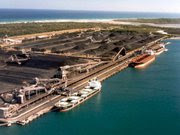
Osho approached dump owners to set up washing plants to recover coal that had been or would otherwise be discarded by collieries around Newcastle, Vryheid and Piet Retief. The coal is of little or no interest to Eskom - getting it to the utility's power stations would be too costly. But it is not too far from the bulk export facilities at Richards Bay.

Transport costs are a critical factor in the coal (and iron ore) business. While Australia might have an advantage in selling to China, SA is closer to India. And India's potential is enormous - the country is planning 75000 megawatts of additional thermal power capacity in five years.

Osho toyed with the idea of acquiring its own road transport fleet, but quickly realised the value of working with small-haulage contractors. These are people who may own a single truck, who may often be short of capital and who often cannot afford the two months' delay normal with payment from large coal companies. Osho pays promptly - often on a daily basis.

Near Brits, Osho has also started to recover hematite (iron ore) discarded as a waste product of vanadium ore mining and is selling it to cement makers. And it is looking at selling the ore to pig-iron producers.

Belarus offers trucks for Indian coal mining


New Delhi, June 18 (IANS) In a bid to boost its exports and strengthen economic ties with India, eastern European state of Belarus Saturday offered its state-of-the-art heavy duty dump trucks to Indian coal mining companies.

The offer was made to an Indian government delegation led by Coal Minister Sriprakash Jaiswal during his meeting with Deputy Prime Minister of Belarus V. Semashko in the country's capital Minsk, an official statement said.

"Deputy prime minister of Belarus evinced interest to associate themselves in the manufacturing of heavy duty dump trucks for coal mining in India," the statement said.

The meeting was also attended by Belarus's minister of industry, deputy foreign minister and deputy minister of energy.

Other machinery on offer during the talks with India included tractors and underground mining equipment.

Meanwhile, the Belarus state-owned heavy equipment manufacturer Belaz indicated that it may take part in the forthcoming tenders of heavy duty trucks which would be floated by India's Coal India Ltd.

Belarus was formerly a republic of the Soviet Union.

Euro Coal-S.African price fall stirs Indian interest


Jun 17,2011

* Richards Bay discount to paper stays at $3-5/T
* Indian enquiries rise for S.African prompt cargoes
* Heavy rain seen tightening Australian supply-Citi
* July S.African cargoes trade at $116/T via brokers

LONDON, June 17 (Reuters) - Physical coal prices fell by around $1.00 a tonne on Friday, pulled down by weaker API4 swaps which were reacting to macroe news and almost universally weaker demand for South African prompt cargoes.

FOB Richards Bay prompt cargoes have been trading this week at as much as $5.00 a tonne below the API4 physical index -- in a more balanced market index-linked prices hover 50-75 cents a tonne either side of the index.

If the weekly published API4 index comes out at $116.00 a tonne for example, a $5.00 discount would equate to a fixed price of $111.00, a level at which Indian traders have said they would buy.

This, plus the drift lower in fixed prices from close to $120.00 to nearer $115.00 for July loading South African cargoes, has roused some fresh Indian buying interest, after a hiatus of several months.

"At $3-5 below index, there's been some more Indian interest, they're enquiring and getting a few things done," one European trader said.

Asian buyers outside of India - China, South Korea, Malaysia, Japan - have also chosen Australian, Indonesian and Russian coal in preference because of the cheaper delivered cost.

South African coal has been uncompetitive into the European market also for months, a situation which is unlikely to change unless there is a sharp price fall.

"With discounts of $5, South African has got to start pricing in competitively somewhere in the world soon," another European trader said.

Indian traders who import the majority of the country's 60 million tonnes of thermal coal shipments have steered clear of South African coal since last October when prices rose from $90 to over $100 a tonne.

Prices have hovered at around $120 a tonne since then largely due to the strength of coal swaps, themselves buoyed by strong oil values. But, during this time Indian buyers have kept shipping term contract volumes from Richards Bay but bought various other coal origins instead.

Indian traders said they would be looking to pay no more than $110.00 but would wait as long as it takes for prices to drop to $100 before buying fresh, substantial tonnages.

It has taken several months for India's avoidance of South African coal to have an impact on prices, traders and suppliers said.

AUSTRALIAN RAIN

The short-term outlook is not relentlessly grim, utilities and suppliers said. There are still potentially bullish factors which could halt a price slide.

China may yet import sizeable quantities of coal and heavy rains in Australia are hindering output and will slow exports, Citibank said in its Global Commodities Daily report.

Asian coal-users, particularly China, have mopped up large tonnages of Australian coal since the March quake and tsunami cut Japan's imports but this may not last much longer.

"There's not a lot of coal left for spot sales in Australia, whether it's so-called off-spec or standard grade," one Pacific coal producer said.


TRADES

Two July loading South African cargoes traded at $116.00, down $1.00.

An August loading South African cargo traded at $117.75, slightly lower than Thursday's levels.

PRICES

A July loading South African cargo was bid at $115.00 and offered at $117.00, down $1.00 on the bid.

An August loading South African cargo was bid at $116.00 and offered at $119.00, also down $1.00.

A September South African cargo was bid at $118.25 and offered at $120.25, down $1.25 on the bid.

A July delivery DES ARA cargo was bid at $117.75 and offered at $120.75, down nearly $2.00 on the bid.

A September DES cargo was bid at $121.75 and offered at $122.25, down 75 cents on the offer.

(Reporting by Jackie Cowhig, sourced Thomson Reuters)

Thar-Coal project to produce cheap electricity: Dr Samar


ISLAMABAD, June 18 (APP): Renowned scientist Dr Samar Mumbarkmand on Saturday said the country had third biggest coal reserves which could be utilized for producing cheap electricity.Talking to Pakistan Television, he said that scientists were working on the Thar-Coal project to meet the growing demand of the electricity in the country.The estimated cost of the project is $115 million, he said.The Thar-Coal project will yield 100 Mega Watt (MW) electricity, he added He said that 40 per cent electricity in the world is generated through coal.

Dr.Samar Mumbarakmand said besides producing of cheaper electricity, 100 million barrel diesel and gas could be produced through Thar-coal which would be sufficient for 30 years.
Thar-coal field has enough reserves for 500 years, he said.He said that foreign countries had shown keen interest in the project.
He hoped that after the success of the project, foreign companies would come forward for investing in this sector.

Dr.Samar said that the massive support of government was available to continue the project.
He said that gasifires have been introduced which are being effective and result-oriented.It is the government’s top priority to improve the energy sector, he said. Dr.Samar said that there is a serious need to focus on utilizing coal which is available in the biggest quantity.

He said that investors can be obtained 20 per cent profit after investing their money in this sector.The scientist said: “It is a cost effective project which must be implemented in letter and spirit for overcoming the energy crisis in the country.”

He said that the project will start producing gas by August this year. He added that the project will also yield cheap diesel.
“We will try to use the Thar water for irrigation purpose, and for this, we are working on it,” he said. (APP)

Vietnam to face serious coal shortage in 2020

6/17/2011 15:00

By Mai Ha |

Vietnam’s coal output has peaked and industry officials anticipate severe shortages by 2020.

Vu Manh Hung, deputy general director of Vietnam National Coal and Mineral Industries Holding Corp (Vinacomin) said that the nation will experience a six million ton shortfall by 2015.

Five year later, Hung said, the shortage is set to increase tenfold.

Vinacomin has maxed out its capacity and output will range between 55 million tons to 72 million tons a year from 2015 to 2020.

Vietnam, a major coal exporter, imported its first coal shipment from Indonesia, this week, to feed power plants in the south.

Vinacomin said that Indonesian coal sells for about the same price as coal that is mined domestically. Hung added that it’s cheaper to import the fuel to southern Vietnam than to haul it down from northern mines.

The country is expected to need 78 million to run its thermal power plants in 2015. Demand may rise, as plans continue to develop to build more power plants.

Some argue that Vinacomin should halt its exports to focus on supplying the domestic market.

Hung argued that Vietnam should sell high-quality coal and import cheaper varieties to power its steel and cement plants.

He said most of the coal Vietnam is exporting is anthracite, a high-quality variety that the country does not need at present. Vietnam also exports a low-quality coal to China which cannot be used in local plants. (By Thanhniennews)

Tokyo Electric restarts coal unit at Hirono plant

Sunday, 19 Jun 2011

Reuters quoted company spokesman said Tokyo Electric Power Co has restarted the 600 megawatt No.5 coal-fired unit at its quake-hit Hirono plant, in a planned move to boost power supply for the peak summer demand season.

Tokyo Electric which is battling a radiation crisis at its Fukushima Daiichi nuclear plant has said it will get the five-unit Hirono plant restarted by summer to make up for a fall in its nuclear power generation.

The spokesman said the No.5 unit was restarted on Wednesday. It will take time to restart the other four units, using crude and fuel oil, as they are more severely damaged. When the March 11 quake and tsunami hit northeastern Japan, the No 2 and No 4 units were in operation and the other three were off line. (sourced from Reuters)

Mr Joseph Micheletti appointed as SVP of Westmoreland Coal


Justify FullSunday, 19 Jun 2011

Westmoreland Coal Company announced the promotion of two employees to new roles within the Company. Mr Joseph Micheletti former Mine Manager of the Company's Jewett Mine was promoted to Senior Vice President Coal Operations overseeing mining operations and Mr Russell Werner, former Director of Accounting was promoted to Corporate Controller.

Mr Micheletti holds a Bachelor of Science degree in Mineral Processing Engineering from Montana College of Mineral Science and Technology. He joined Westmoreland in August 1998 and has held several key leadership positions at several Westmoreland mining projects, prior to his promotion in June 2011. Mr Micheletti has worked in the production, maintenance, processing, and engineering disciplines of the mining industry for 24 years and sits as a Director of the Rocky Mountain Coal Mining Institute.

Mr Werner joined Westmoreland in June 2006 and was named Director of Accounting in April 2008. Prior to joining Westmoreland, Mr Werner worked for nine years in public accounting. Mr Werner holds a Bachelor of Science degree in Accounting and became a certified public accountant in 1994.

Westmoreland Coal Company, which recently listed on the NASDAQ Global Market exchange, is the oldest independent coal company in the United States. The Company's coal operations include coal mining in the Powder River Basin in Montana and lignite mining operations in Montana, North Dakota and Texas. Its power operations include ownership of the two-unit ROVA coal-fired power plant in North Carolina.

Australia Newcastle thermal coal slips

Sunday, 19 Jun 2011

Bloomberg reported that Power station coal prices at Australia Newcastle port an Asian benchmark declined 0.1% in the week ended.

According to the globalCOAL NEWC Index Coal prices at the New South Wales port were USD 119.19 a tonne compared with USD 119.35 the previous week.(Sourced from Bloomberg)

China coal transport by railway grows 11pct in May

Sunday, 19 Jun 2011

According to the National Development and Reform Commission on June 16, China coal transport volume by railway reached 186.13 million tonnes in May up by 18.47 million or 11%YoY. Among the total amount, thermal coal accounted for 129.22 million tonnes up 14.22 million or 12.4%YoY.

Cumulatively putting the five months together, the figures are as follows:

1. Coal
922.63 million tonnes up 109.19 million or 13.4%

2. Thermal coal
656.04 million tonnes up 94.13 million or 16.8%.

In terms of the main coal passages in the five months, Datong-Qinhuangdao route completed 178.82 million tonnes, up 14.89 million or 9.1%, Houma-Yueshan route transported 74.26 million tonnes up 1.05 million or 1.4%. (sourced from MySteel.net)

Spot US coking coal prices mixed - Energy Publishing

Sunday, 19 Jun 2011

Bloomberg quoted according to Energy Publishing Inc Metallurgical coal prices were mixed this week in the US spot market as buyers resisted paying higher prices for the steelmaking component.

Tennessee based data provider reported spot prices for low volatility coking coal fell 25 cents to USD 315 a ton in the week ended today, the Knoxville. High volatility coal dipped USD 6.58 or 2.4% to USD 269.33.

Energy Publishing said “Buyers perceive that the price is too high, but there isn’t a corner in which to hide.”

Energy Publishing says it surveys buyers and sellers of coal to determine pricing.(sourced from Bloomberg)

CIL price hike to help Bengal mop up INR 600 crore extra

Sunday, 19 Jun 2011

Coal India said that the recent coal price hike by the PSU will help West Bengal rake in INR 600 crore additional coal cess.

A senior CIL official said that "The coal cess to West Bengal from Eastern Coalfields for the month of April and May 2011 was INR 220 crore as against INR 120 crore in the previous year.”

He added that "An extra INR 50 crore per month from coal price hike will translate into additional INR 600 crore per annum.”

At a time when coal price hike is hurting several industries, it turned out be a boon for the cash strapped the West Bengal government that will earn additional revenue of INR 600 crore.(sourced from PTI)

NTPC loses 3 coal blocks due to failure in development

Sunday, 19 Jun 2011

PTI reported that the Indian government has cancelled five coal blocks allocated to power companies, including three to National Thermal Power Corporation due to their failure to develop them.

NTPC's three coal blocks Chhati Bariatu (South), Chatti Bariatu and Kerandari have been cancelled. They have an estimated production capacity of 26 million tonne per annum and total reserves of 836 million tonne.

A letter addressed to the chairman and managing director of NTPC said that "The Coal Ministry is of the view that allocatee company is not serious about development of the coal blocks and has, therefore, decided to deallocate coal blocks, allocated to NTPC.”

Reacting to the development, an NTPC official said there was no delay on the part of the company in developing these three blocks and the deallocation process lacked transparency. The company official said that "NTPC is committed for timely development of these blocks and has put all out efforts for early development of these coal blocks. The whole process and decision of deallocation is not at all transparent and needs a holistic and rational review.”

The official added that "If compared with the contemporary coal blocks, NTPC is far ahead from the others. Even, the blocks, adjoining to these coal blocks in North Karanpura coalfield, are much behind than NTPC's blocks and still, they are not in the deallocation list.”

Chatti Bariatu and Kerandari coal blocks in North Karanpura coalfields in Jharkhand were allocated to the public sector company NTPC in 2006 for captive use in their own specified end use projects. While Chatti Bariatu (South) coal block in Jharkhand was given to it in 2007.
(sourced from PTI)

Bumi 1Q net profit increases 16.5%

Sunday, 19 June 11

PT Bumi Resources Tbk (BUMI), Indonesia's largest coal exporter that is 25% owned by London-listed Vallar Plc, reported a16.49% increase in net profit for the first quarter of this year on the back of higher revenue, as quoted by Insider Stories.

Bumi posted US$113 million net profit in 1Q 2011 from US$97 million net profit a year earlier.

The company booked US$1.23 billion sales revenue, a 21% growth from US$1.02 billion. Average selling price rose 39.65% to US$87.63 per ton from US$62.75 per ton. Bumi's operating income increased 44.29% to US$316 million from US$219 million.

If you believe an article violates your rights or the rights of others, please
contact us.
(sourced coalspot)

SAIL plans to raise USD 400 million from overseas lenders - Report

Sunday, 19 Jun 2011

PTI reported that after failing to launch the initial public offer so far, Steel Authority of India now plans to borrow USD 400 million from overseas lenders to part finance its expansion and modernisation plans.

The report quoted a source in the know as saying that “The company has sought expression of interests from overseas lenders to raise USD 400 million through external commercial borrowings.”

The source, however, said that the lenders from whom the targeted amount would be borrowed would be decided upon later depending upon their terms and conditions.

The source said the fund would be used to finance SAIL's modernisation and expansion plans.

The deadline for their response could not be ascertained.

SAIL has already embarked on INR 70,000 crore capacity expansion plan to take its domestic production to 23.46 million tonne per annum by 2012-13 from 14.35 million tonne at present. It has INR 14,337 crore capital expenditure plan for the current fiscal. (sourced from PTI)

NMDC kick starts Bailadila to Visakhapatnam iron ore pipeline project

Sunday, 19 Jun 2011

Indian iron ore miner NMDC Ltd has finalised INR 3,000 crore slurry pipeline project for evacuating ore from its Bailadila mines in Chhattisgarh to Visakhapatnam in Andhra Pradesh.

Mr Rana Som CMD of NMDC said that “I have just finalised the complete structure of laying the pipeline for evacuation of material from our Bailadila mines to Jagdalpur in the first stage and to Vizag in the second stage.”

He added that “We held a meeting on the technical and financial aspects, where we have taken a decision to kick off the project.”

He said the company decided to set up the pipeline, connecting Bailadila with Vizag steel plant, because evacuation of iron ore from the mines was posing a problem on account of damage to Essar’s slurry pipeline and constraints in rail movement due to the Naxal movement.

In the first phase, the company would lay a 150 kilometre pipeline from Bailadila to Jagdalpur in 18 months at an investment of INR 1,000 crore. The second phase would see laying of pipeline from Jagdalpur to Visakhapatnam at an investment of INR 2,000 crore.

Mr Som said that “We won’t wait for completion of Phase-I. We might as well execute Phase-II simultaneously.”

The execution of the project, according to Mr Som will enable NMDC to dispatch an additional 6 million tonnes to 7 million tonnes of ore.

He said that “To that extent, the production will also go up emphasizing that production and evacuation of ore were interlinked.” (sourced BS)