Friday, 27 May 2011
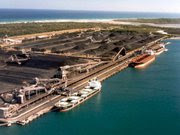
Power-station coal prices at Australia’s Newcastle port, an Asian benchmark, declined 1.6% in the week ended May 20th 2011. Coal prices at the New South Wales port fell to AUD 116.80 a tonne from AUD 118.74 the previous week.
Xstrata Plc the world’s largest exporter of power station coal, BHP Billiton Ltd. and Rio Tinto Group are among mining companies that ship coal through Newcastle. (sourced Bloomberg)
Friday, May 27, 2011


South Africa mining wage negotiations begin
Friday, 27 May 2011
Chamber of Mines said that the 2011 wage negotiations in the gold and coal mining sectors have begun, with the National Union of Mineworkers demanding a 14% basic wage increase.
Chamber of Mines industrial relations adviser Elize Strydom in a statement said that "From our initial analysis, the demand for a new minimum monthly wage constitutes an increase of 25%.”
She added that "This, together with the demand for an increase of basic salaries of 14% as well as a demand for approximately 45 percent increase in the living out allowance (which for gold currently adds another ZAR 1400 to the remuneration package), reflect a disregard for Consumer Price Index which is currently just slightly above four percent.”
However, NUM national spokesman Lesiba Seshoka said the 25% increase mentioned by the chamber was a creation of their imagination... they are acting like mathematicians. He said the NUM's demand for a 14% increase was reasonable.
Headline inflation might be around four percent, but workers would suffer more than others from the increases in food and fuel inflation.
Strydom, who would lead the negotiations for the mining companies negotiating at the Chamber of Mines, said NUM's demands were concerning.
She said that "We are therefore concerned, particularly as the mining companies have gone to great lengths to share with all interested parties the severe cost pressures in the industry. The gold mining companies have been at pains to highlight the significant disjuncture between the gold price in dollars and the financial situation of the South African gold companies at the quarterly releases of their companies.”
The NUM represents the largest number of employees in the mining industry.
(sourced TimesLive)
Iron prices recede on dormant steel prices and burgeoning stockpile in China
Friday, 27 May 2011
The spot market was devoid of much activity a reflection of dormancy in the domestic steel market in China. The slow moving raw material has led to record pile up at ports touching 89 million tonnes.
The cumulative impact has been gravitational on the spot prices which have outstripped the futures with a yawning gap affecting the nearby contracts and forwards.
At the same time the steel production has remained bullish averaging above 1.9 million tonnes since January and 1.94 million tonnes in the first 10 days of May. The real impact of the power rationing will be felt only by the end of June. Hence the deluge of material will keep the chips down for the time barely leaving any scope for revival in ore prices immediately. More info..visit steelguru.
POSCO to lower stainless steel prices for June
Fri May 27, 2011 9:31am GMT
SEOUL May 27 (Reuters) - POSCO , the world's third-biggest steelmaker, will lower prices of its major stainless steel products by 300,000 won ($275.36) a tonne for June, a company spokesman said on Friday, reflecting a recent fall in nickel prices.
Its June prices of hot-rolled and cold-rolled stainless steel products would be cut to 3.6 million won and 3.87 million won per tonne, respectively. ($1 = 1089.500 Korean Won) (Reporting by Ju-min Park; Editing by Jacqueline Wong, Thomson Reuters)
Japan steel body: expects 11/12 crude output to drop slightly yr/yr
Fri May 27, 2011 8:42am GMT
TOKYO May 27 (Reuters) - Japan's steel industry body said on Friday that it expects crude steel output in the country to drop to just below 110 million tonnes in the 2011/12 financial year from 110.8 million tonnes in 2010/2011.
(Reporting by Yuko Inoue; Editing by Joseph Radford,Thomson Reuters)
TOKYO May 27 (Reuters) - Japan's steel industry body said on Friday that it expects crude steel output in the country to drop to just below 110 million tonnes in the 2011/12 financial year from 110.8 million tonnes in 2010/2011.
(Reporting by Yuko Inoue; Editing by Joseph Radford,Thomson Reuters)
Miners back Govt plan to freeze mining permits - The Jakarta Post
Wednesday, 25 May 11
Indonesian coal miners hailed the government’s decision to impose a moratorium on the issuance of new mining permits, saying the freeze would be needed to give authorities time to settle the growing conflicts resulting from overlapping permits, reports The Jakarta Post.
Speaking with Jakarta post reporter Rangga D. Fadillah,the Indonesian Coal Mining Association (APBI) said, association fully supported the government’s plan, since overlapping permit conflicts had been a problem for coal mining businesses operating in Indonesia.
“This is a very good move,” he added.
The number of mining permits issued has increased sharply since the passing of the new mining law in 2009, which empowers local administrations to issue mining permits in their areas.
Since the implementation of the law, the number of mining permits increased to 10,245 as of August, last year, up from 597 permits in 2000, according to government data.
One result of the significant increase in the number of new permits being issued was that many mining permits overlapped one another since they were issued without following a standard mapping system or the procedures that had been laid out by the central government, he said over the phone on Tuesday.
Supriatna said that regional governments also granted many mining concessions without following regulations such as obliging the permit holders to conduct environmental impact analyses (Amdal) and submit explorations.
“Many of those governments didn’t know what to do. They didn’t understand the procedures,” he added.
“Due to these problems, even permits for state-owned coal producer PT Bukit Asam were given to other companies. That’s why verification and permit audits are necessary.”
The newly appointed director general for mineral and coal, Thamrin Sihite, had previously reported that most of the permit overlaps were in Kalimantan.
He pledged that the government would take all necessary measures to solve the problem.
The paper further reported that, coordinating Minister for the Economy Hatta Rajasa said on Monday that the government had temporarily stopped issuing new mining permits and extending the existing ones to settle growing conflicts between mining companies over the overlapping mining territories in the country, Kontan reported on Tuesday.
Hatta added that the moratorium on new mining permits would be lifted only after the mine overlaps were settled.
During the moratorium, the government would audit and verify the thousands of mining permits issued by provincial and regental governments to ensure that there would not be any overlap, he said.
Hatta added that the central government would form a team to be led by the Energy and Mineral Resources Ministry and the Domestic Affairs Ministry to audit mining permits across the country.
Finance Minister Agus Martowardojo said that the verification process was needed not only to settle problems caused by overlapping mining areas but also to ensure that all permit holders followed regulations and did not destroy the environment.
The growing conflicts resulting from the overlapping mining areas have discouraged foreign investors, who are now crucial for boosting mining operations.
The Energy and Mineral Resources Ministry said it expected investment in the mineral and coal mining sector to reach US$3.2 billion this year, a slight increase from last year’s $3.18 billion.
Source: The Jakarta Post, coalspot
If you believe an article violates your rights or the rights of others, please contact us.
70 PERCENT OF HARUM’S PRODUCTION SOLD - BISNIS INDONESIA
Wednesday, 25 May 11
Coal producer PT Harum Energy Tbk claimed that out of this year's total production target of 10 million tons, 70% or 7 million tons had been sold, reports Bisnis Indonesia, an Indonesian news paper.
Managing Director of Harum Energy, Ray Antonio Gunara, said the company plans to gradually increase production capacity to 10 million tons this year from 7.4 million tons the previous year. As for next year, the target is to reach 14 million tons.
"Out of the total target of 10 million tons this year, 70% has already been contracted. The price cannot yet be determined because it is set per quarter and dependent on index," he said yesterday.
The company might revise its production target upwards if exploration results indicate higher reserve potential.
"For PT Tambang Batubara Harum (TBH), we expect it to enter production phase before the end of this year. We are still in the construction phase and there are administrative permits that need to be cleared. This year’s production is expected to reach 500,000 tons but it depends on the operation commencement," he explained.
Ray is hoping for a slightly higher sales volume than the production target this year. Last year sales reached 8.3 million tons. "We expect sales and bottom line improvement to equal the rate in the first quarter 2011."
This year, the budgeted capital expenditure is US$ 30 million, among others to be used for road hardening to improve transport quality, the construction of a new coal crusher unit, construction of port facilities at TBH, and increasing the number of tugs and barges fleet.
"The additional expenses will likely be funded from internal sources as the amount is not expected to be large," added Ray.
Up to 31 March 2011, the company recorded revenues of Rp 1,51 trillion or up by 69% from same period 2010 of Rp895 billion.
Net income allocated to entity holders is reported increase by 131% to Rp309 billion compared to same period last year Rp134 billion.
Growth in revenue and net income was primarily due to higher average coal selling price and increase of coal sales volume. Combined sales volume of coal from PT Mahakam Sumber Jaya and PT Santan Batubara reached 2.3 million tons in the first quarter of this year, up from 2.1 million tons in the same period of 2010.
The company’s average selling price of coal was US$88 per ton throughout the 1st Q of 2011 or an increase of 36% compared to same period in 2010 due to the rising trend in global coal prices.
"The average price is expected to increase compared to the achievement in the 1st Q of 2011. The average price of the 1st Q of 2011 was actually a carryover of 2010 contracts.
It is expected that the carryover in the 2nd Q of 2011 could be less, so that the average price could be better.
Source: Bisnis Indonesia, coalspot
If you believe an article violates your rights or the rights of others, please contact us.
Friday, May 20, 2011
Karnataka steel mills likely to face closure - ASSOCHAM
Friday, 20 May 2011
ASSOCHAM release said that major steel mills in Karnataka could soon be forced to close operations due to shortage of iron ore, threatening the livelihood of lakhs of families.
In a release, industry body the Associated Chambers of Commerce and Industry of India said that the impact of current crisis stemming from a blanket ban on iron ore mines in the Bellary Hospet region is likely to spread fast to smaller units and leave lakhs of workers jobless.
On May 6th 2011, the Supreme Court asked a team of officials to conduct a joint survey of mining lease areas mentioned in the Lokayukta report.
ASSOCHAM said that "If the joint team concludes that there has been illegal mining in encroached areas, then the lessee will immediately stop all mining operations in the entire demarcated area."
Mr DS Rawat secretary general of ASSOCHAM, in letters to Mr BS Yeddyurappa chief minister of Karnataka and Mr PV Jayakrishnan chairman of the Central Empowered Committee, said that "The Supreme Court has not given any direction to completely stop all mining activity in the district. In fact the apex court has asked to assess the encroachment in a scientific manner without effecting the current operations."
Mr Rawat said that but officials at the Department of Mining and Geology at Hospet have issued closure notices to all mines in the district, severely affecting the functioning of steel industry.
The mines in Karnataka supply iron ore to several large steel plants like JSW, Kirloskar Ferrous, Mukand and Kalyani Steels. The State also supplies raw material to dozens of small and medium sized sponge iron units located in Maharashtra, Gujarat, Andhra Pradesh and Tamil Nadu.
Steel, iron and other industries have invested close to about INR 70,000 crore in the landlocked Bellary Hospet region, which has abundant availability of iron ore.
Mr Rawat said that "The State finances will be adversely affected as these industries are paying to the tune of INR 8,000 crore a year in the form of excise duty, royalty and value added tax."
ASSOCHAM release said that mining should be moved from unorganized sector to the organized if it is to be done in a legal, scientific and environment friendly manner.
Karnataka accounts for 15 million tonnes of steel production representing 25% of the country's output. Keeping in view the huge investments, employment of lakhs of workers, social responsibilities and dependency of industries on iron ore, the chamber earnestly requested the CEC to ensure uninterrupted availability of iron ore lumps and fines to meet industrial requirement while complying with the Supreme Court order.
Oversupply, very large ore carriers " Eat Up" on Dry Bulk Freight Rates- Nikos Roussanoglou, Hellenic Shipping
Thursday, 19 May 11
After a brief upward momentum which ended early last week, the Baltic Dry Index, the dry bulk market’s benchmark has returned to its usual pattern, falling yesterday for a seventh straight session. The BDI is now down to 1,271 points, again as a result of the suffering from huge oversupply panamax market segment. The relative Panamax Index was down by 4% yesterday to 1,597 points, the Capesize market was practically unchanged, to 1,459, still lagging against its half in size counterpart. On a more resilient tone, the Supramax market was up by six points to reach 1,399 points.
Average daily rates for panamaxes now stand at $12,806, while for Capesizes they stand at just $5,688. Supramaxes command a daily average of $14,625, while handysizes earn $11,679 on average. According to Erik Nikolai Stavseth, an analyst with Arctic Securities ASA in Oslo, who was quoted by Bloomberg, the decline may continue in the panamax front. He said that they expected a further weakening in the panamax market as reports indicate a high number of vessels available. According to the analyst, power shortages in China and low coal inventories will most certainly boost coal imports, but again they won’t be enough to lift rates.
Commenting on the panamax market, Fearnley’s said in its latest weekly report that “another relatively slow week, still shoving some activity from EC South America, but some fix and failures as market clearly is in a downward trend. Rates nudged up to the mid USD 25k daily range and around USD 500k bonus on the run to the eastern hemisphere. For Transtlantic business the pressure on the Continent for prompt tonnage seems to ease and rates on average around the 13k mark. Rates in the Far East also heading south with spot-prompt ships struggling to find cover from any fresh orders as rates descend closer to the 10k level. Period business very limited and the forward market now rating the next 18 months just under USD 12k/day. Other segments not adding any support or fuelling a bearish sentiment” said the report.
As for the Capesize market, it mentioned that “during the past week, two more 12-month period deals have been done at a lower USD 11500. Even as new lows are reached the volume is thin. The recent fall in bunker prices has not come to the owners benefit, but rather to the charterers. Rates across the board have fallen during the last 7 days and today the weakest market is the in the Atlantic. With the present spot market charterers are also struggling to make sense of taking short period vessels as it is difficult to recover the premium vis-a-vis the spot market” said Fearnley’s.
Finally, on the Handy/Supramax markets: “The Atlantic is marked by volatility and very positional, nevertheless USG, NCSA, Cont remain strong thanks to the petcoke, grains and scrap but the flooding in the Mississippi could have a negative effect on the market. The S.Atlantic is a bit more active and seeing more and more tonnage ballasting from Med. The Bl.Sea is difficult for Supras. Trips to Feast are at 20k+400k levels. Outlook: Steady. Pacific market remains quiet. For Indo-India, Supras in N.China gets close to 13k. Nickel-ore rounds get firm rates in high teens from Indonesia. Also many owns prefer to do now Indo coal or nickel ore to China rather than going to India owing to monsoons. WCI-China rates slided to 15k and from ECI around 13k, but few ships seen ballasting to Indo as not much cargoes ex-ECI. Red Sea, ferts on handymax/Supras are fixed at very mid 20´s pmt on voyage basis to WC India. Large Supras for RBCT/India round now asking 15k. Short period deals done at mid-teens for large Supras” concluded the report.
Source: Nikos Roussanoglou, Hellenic Shipping, coalspot.com
If you believe an article violates your rights or the rights of others, please contact us.
INDONESIAN COAL EXPORTS DROP 7.98 PERCENT IN APRIL
Thursday, 19 May 11
Indonesian coal exports dropped to 2.168 million tons in April, and up 7.13 percent on the year and 7.98 percent below March, according to our sources. Indonesia exports 24.99 million tons of coal in April.
Our sources further said that, first four months export of 98.87 million tons put full year volumes on pace to exceed 296 million tons well above 2010 exports.
Indian buyers have reduced Indonesian coal imports in April 2011 to 6.28 million tons from 7.70 million tons m-o-m. However, Chinese returned to Indonesia after silent about almost first three months of this year and brought 35.99 percent more coal in April from March imports.
The next few months being summer months in India and china the demand for power, steel and cement increases thereby the movement in coal may be witnessed resulting in higher consumption.
China has bought 6.10 million tons of Indonesian coal in April against its import of just 4.48 million tons in March. Chinese buyers are still in the market to conclude the deals to cover summer requirements.
Recently, Berau Coal, one of the country’s largest coal miners have signed a five-year deal with Huaneng Power International and a three-year contract with Zhushui Energy Resource Group, as quoted by local paper. According to paper, Berau will sell 1.5 million tons of coal annually to each company.
According to ICAP Shipping, China's total coal imports in the first quarter were some 27 percent down on a year ago at 32.3 Mt (2010: 44.4 Mt).
49.57 percent of total Indonesian coal exports in April goes to fuel hungry countries such as India and China.
Indonesian government has already successfully implemented monthly coal reference price for its coal. Coal ministry also fine tuning their coal reference prices on a monthly basis based on market condition.
Coal producers of Indonesia were asked to comply with the government declared coal price reference prior to concluding any coal sales agreement with its buyers.
Ministry of Energy and Mineral Resources of Indonesia has set the May 2011 Indonesian Coal Reference Price for thermal coal at US$ 117.61 per ton, which was 3.61 percent lesser than April 2011 price of US$ 122.02.
Assessment basis of coal price reference was calculated considering coal with GCV (GAR) 6,322 kcal/kg, Total Moisture (arb) 8.00%, Total Sulphur (arb) 0.8%, Ash Content (arb) 15.00% and delivery free on Board (FOB) Vessel basis and applicable for spot contract, delivery between 1 - 31 May 2011.
Instead of dropping in HBA, Indonesian coal prices were still at stable position. small scale mines from Kalimantan were offering 6300 GAD coal between US$ 82 - 87 per MT and premium coal supplier's prices were already in high nineties or at three digits pricing, an international trader said.
According to market stakeholders, the prices may stand stable at this moment, but the prices and demands are expected to move stronger in coming months.(cs) (sourced coalspot)
If you believe an article violates your rights or the rights of others, please contact us.
Indian iron ore mining mess - Karnataka bans mining
Friday, 20 May 2011
BS reported that Karnataka state government has issued a direction to halt all kind of iron ore mining activities in the Bellary Hospet region for a temporary period.
The department of mines and geology issued a notification to all mining lease holders on May 13th 2011, to shut down all kinds of mining activities, including transportation of mined material.
The action of the DMG came in the wake of the fresh joint survey of 99 mining leases in the district as ordered by the Supreme Court on May 6th 2011.
The apex court had directed for constituting a tripartite committee from an SC panel, DMG and Lokayukta officials to conduct a survey to demarcate the boundaries and assess the extent of encroachments. The team commenced its work from May 16. The DMG, to facilitate the smooth conduct of the fresh survey, has issued orders to mining leaseholders to stop all kinds of mining activities and transportation of ore with immediate effect. It has also asked them to surrender all the mineral dispatch permits and relevant trip sheets until completion of the survey.
Mr DV Pichamuthu director of Federation of Indian Mineral Industries South said “It is very difficult to understand the logic of the mines department. We have been fighting for the last 10 months for restarting exports. Even after the SC directions in favor of the miners, the state government has not started issuing export permits. We are closely watching the situation. All these days, only the mining companies have suffered and the recent move of the state government has hit the steel companies. Let the steel industry take up the issue with the government now.’ (sourced from BS)
Rio Tinto sees iron ore prices stabilising in Q3
Thu May 19, 2011 2:24am GMT
* Rio sees Q3 prices within 1 pct of Q2
* Rio says continuing to see growth in the market
* Sees high prices persisting (Adds detail, background)
By Rebekah Kebede
PERTH, May 19 (Reuters) - Rio Tinto , the world's second-largest iron ore producer, expects global prices to stabilise in the September quarter after a volatile start to the year and sees only a small change in its quarterly price. Rio Tinto expects iron ore prices in the September quarter to vary by only around 1 percent compared with the June quarter, Sam Walsh, the firm's iron ore chief told Reuters on Thursday, underscoring a tight supply and demand balance. "We are seeing continuing growth in the market," he said on the sidelines of a meeting with Treasurer Wayne Swan, referring to global demand for the steel-making raw material. Walsh's assessment of market conditions is in contrast with signs of slow buying from top consumer China as steel mills there work off stockpiles of ore amid a slow down in steel shipments. [ID:nL4E7GH0AY]
"(Price movements) indicate that we will continue with very high prices which really are signifying that the market continues to be tight," Walsh said.
"The prices for the next quarter look like they will be within one percent of current prices," he added. Chinese steelmakers had been banking on a resurgence in construction in the second quarter to boost demand for steel but tighter liquidity, thanks to Beijing's inflation-taming campaign, has slowed down property projects.
Iron ore prices have tumbled from a 2011 peak of around $191 a tonne in February to a current price of around $176 a tonne .IO62-CNI=SI. In March prices fell below $165 a tonne.
Walsh said Rio Tinto was on track to boost its output of iron ore to around 230 million tonnes in 2011 from around 200 million last year as it expands its mines. By 2013, he forecast the company's output would climb to 283 million tonnes, then 333 million two years after that. Rio Tinto mines the majority of its ore in the Pilbara region of Australia, making it the world's no. 2 producer behind Brazil's Vale . Australia's other big iron ore miners are BHP Billiton , and Fortescue Metals Group . The system whereby prices are set every three months based on average spot prices over the preceding quarter was spearheaded by BHP Billiton and quickly adopted by other producers in lieu of the now-defunct policy of only pricing ore once a year. Steel mills, particularly in China, fought against the shift, but eventually had no choice but to accept the new regime given the dominance in supply wielded by a small number of large producers. (Additional reporting by Jim Regan; Editing by Balazs Koranyi, sourced Thomson Reuters)
India SAIL says keen to set up steel plant in Afghanistan
Thu May 19, 2011 12:13pm GMT
NEW DELHI May 19 (Reuters) - Steel Authority of India is keen to set up a steel plant in Afghanistan if the country provides infrastructure support and raw material sources, the Indian state-run firm said on Thursday.
SAIL said in a statement 15 Indian steel and mining companies, including itself, were among the 22 companies short-listed by the Afghanistan government for grant of mining licences at Hajigak deposits, located 130 kilometres west of Kabul, that carry an estimated 1.8 billion tonnes of high-quality magnetite.
SAIL said its chairman had discussed the proposal with the Afghan minister for mines and that the Afghanistan government had shown keen interest in the proposal. (Reporting by Devidutta Tripathy; Editing by Aradhana Aravindan, sourced Thomson reuters)
Quality issues threaten India iron ore sales to China
May 19, 2011 1:59pm GMT
* China says over 800 shipments from India substandard in Jan-Apr
* China buyer of nearly all India's iron ore exports
(Releads with Indian industry reaction, trader quote, changes dateline)
By Rajendra Jadhav and David Stanway
MUMBAI/BEIJING, May 19 (Reuters) - India's iron ore exports and prices could be hit by quality issues on $2.2 billion of shipments raised by top buyer China, an Indian industry official said on Thursday.
India is the world's third-largest iron ore supplier and sends almost all its exports to China, trade worth around $1.5 billion per month.
During the first four months of 2011, over a third of India's exports to the Chinese province of Jiangsu were substandard, China's General Administration of Quality, Supervision, Inspection and Quarantine (AQSIQ) said in a notice posted on its website (www.aqsiq.gov.cn).
"We should check the quality of ore before shipping. It is a serious issue. It may affect India's exports (and) price realisation," Basant Poddar, vice-president, Federation of Indian Mineral Industries told Reuters.
Jiangsu is China's third-largest importing province, receiving over 10 percent of the country's iron shipments in the first quarter.
Of the 2289 shipments that AQSIQ inspected from India into Jiangsu from January to April, 827 either had a lower iron content than stipulated in contracts or contained too many impurities, AQSIQ said.
India's shipments to China have yet to recover after Karnataka state, supplier of about a quarter of India's shipments, lifted an export ban in April. China's imports from India in the first quarter were down over 20 percent on the year at 26.5 million tonnes.
Iron ore prices are around $185 a tonne for spot sales while contract prices, set on a quarterly basis, hit a record $179.2 per tonne in the second quarter. [ID:nL4E7GJ0DM]
The problems were with cargoes sent by some traders rather than those from India's large mining companies, AQSIQ and industry players said. India's biggest iron ore miner is state-run NMDC and its biggest iron ore exporter is Sesa Goa .
Some traders and inspectors had produced inaccurate shipment reports for iron ore cargoes, AQSIQ said.
AQSIQ said local inspection departments would crack down on the practise and urged local iron ore importers to pay more attention to contracts, and to the reputation and size of their trading partners.
"Small miners and traders sometimes supply substandard ore as some of them are buying (different-grade) ores and blending them," said an iron ore trader based in Jiangsu province.
Chinese buyers often pay as much as 98 percent of the price for the key steel-making ingredient up front on the basis of Indian inspection reports.
After the shipment has cleared customs, buyers get their own checks on quality. If the shipment is below standard, they ask for compensation.
(Additional reporting by Ruby Lian in Shanghai, sourced Thomson Reuters)
(Writing by Jo Winterbottom; Editing by Simon Webb)
China daily crude steel output at record high early May
Fri May 20, 2011 10:21am GMT
* Daily output at new record of 1.95 mln T
* Production over 1.9 mln T since early Feb
* Falling stockpiles point to healthy demand
By David Stanway and Ruby Lian
* Daily output at new record of 1.95 mln T
* Production over 1.9 mln T since early Feb
* Falling stockpiles point to healthy demand
By David Stanway and Ruby Lian
BEIJING/SHANGHAI, May 20 (Reuters) - Daily output of crude steel in China reached 1.9467 million tonnes in the first 10 days of May, with production at record levels despite worries about power shortages and the impact of Beijing's monetary tightening policies.
Industry consultancy Mysteel, citing data from the China Iron and Steel Association, said output was up 0.29 percent from May 1-10 compared with the previous 10 days.
Earlier CISA figures put daily output from April 21-30 at 1.941 million tonnes, with average production for the whole of April standing at a record 1.931 million tonnes.
Figures from the National Bureau of Statistics issued last week showed daily output in April at an even higher level of 1.968 million tonnes.
Despite grumbling from the China Iron and Steel Association and the country's industry ministry, China's steel mills have been producing around 1.9 million tonnes a day since the end of February, compared with about 1.7 million tonnes over 2010.
The second quarter is traditionally a strong season for steel and this year the sector has headed off a series of fresh problems, including the winding down of a state stimulus package and a tougher monetary regime that has reduced the amount of available credit.
Analysts predict output will stay near historical highs even in the face of power shortages and smelter closures as the quarter comes to an end.
"Steel production will very likely stay around 1.9 million tonnes on a daily basis over the course of this year, but especially in the second quarter," said Cai Peipei, an analyst with Tebon Securities.
GLUT OR NOT?
Daily output in April amounts to 718 million tonnes on an annualised basis, 15 percent higher than last year's total production.
CISA's secretary general Zhang Changfu told a news briefing at the end of April that overcapacity was eating into profit and that much of the blame could be placed on private mills. He said that overcapacity meant that steel prices could not rise to match the increases in raw material costs.
Steel product prices are currently close to record highs, with a tonne of rebar on the Shanghai spot market currently selling for 4,940 yuan ($759.4) per tonne, just short of the 5,000 yuan peak reached in mid-February, according to Mysteel.
Product stockpiles have been falling since the new year. Data from Mysteel put trader rebar stocks at 6.1 million tonnes at the end of April, compared with 7.7 million tonnes in early March.
Figures from the Ministry of Commerce show that construction steel stockpiles in 29 major cities fell 12 percent from March to April, ending the month at 8.56 million tonnes.
CISA's own figures for April also show an inventory decline of 13.83 percent compared with March. ($1 = 6.505 yuan) (Editing by Jacqueline Wong, sourced Thomson Reuters)
Subscribe to:
Posts (Atom)

 Posts