Google Website Translator Gadget

Showing posts with label quake and tsunami. Show all posts

Monday, April 4, 2011

Tsunami alert issued after Indonesia's 6.7-magnitude quake


Mon, Apr 4, 2011 2:51 AM IST
By Indo Asian News Service | IANS

Jakarta, April 4 (IANS) A tsunami alert was issued early Monday after a 6.7-magnitude quake jolted the Java region of Indonesia, Xinhua reported.

The quake struck at 3.06 a.m. The epicentre was at a depth of 24 km, the US Geological Survey said. The quake-hit region is about 400 km southeast of Jakarta.

Wednesday, March 16, 2011

Japan's nuclear crisis

Wed Mar 16, 2011 1:23pm GMT

TOKYO, March 16 (Reuters) - Following are main developments after a massive earthquake and tsunami devastated northeast Japan and crippled a nuclear power station, raising the risk of uncontrolled radiation.
* Japan's nuclear agency says military will help pump water at the No.3 reactor at the quake-damaged Fukushima Daiichi nuclear power complex in northeastern Japan, and for the spent fuel pool in No.4 reactor.

* Agency also says radiation levels outside the plant spiked around noon but fell back.

- A helicopter was unable to drop water to cool the No.3 reactor, probably because of the high radiation, Kyodo news agency said, quoting the defence minister.

- Police will attempt to cool No.4 reactor's spent nuclear fuel pool using a water cannon, NHK TV says.

- Japan's top government spokesman says radiation levels around the complex are not at levels to cause an immediate health risk.

- Tokyo is safe for international travellers, the Japanese Red Cross says.

- There is no evidence of a significant spread of radiation from Japan's crippled nuclear plants, the World Health Organisation says.

- Operator says it is unable to resume work cooling the reactors due to radiation risk. Workers ordered to leave the plant were allowed back in after radiation levels fall. Operator says there were 180 workers on site as of 0230 GMT.

- Fire breaks out at reactor No.4 a day after a blast blew a hole in the building housing spent fuel rods. White smoke seen from No.3 reactor most likely to be steam from the water that is being poured to cool the rods.

- No plan yet to extend evacuation zone near the facility, 240 km (150 miles) north of Tokyo.

- Australia urges its citizens with non-essential roles to consider leaving Tokyo and the most damaged prefectures, and Turkey warns citizens against travelling to Japan. France urges nationals living in Tokyo to leave country or move south.

- Radiation levels in Tokyo were 10 times normal at one point, but not a threat to humsan health, officials said.

- Japan's benchmark Nikkei average closes 4.5 percent up on Wednesday after suffering its worst two-day rout since 1987. The index surged over 6 percent at one point.

- Tens of thousands of people are still missing since Friday's quake and tsunami. About 850,000 households in the north without electricity in near-freezing weather. Death toll is expected to exceed 10,000. (Tokyo bureau; Compiled by World Desk Asia, Reuters)

Implications of the Japan Crisis on steel, coal, shipping industry

Mar16, 2011

In the aftermath of the devastating earthquake that has hit Japan, fears are growing over the potential for radiation leaks from damaged nuclear plants. Equity markets have been hit while FFA prices have also sustained significant losses. With the situation still unfolding, the longer term impact of the disaster on commodity markets is unclear, although some initial conclusions can be drawn.

In the short term, shipping has been disrupted with 13 ports reported by Reuters to have closed, with some of these unlikely to be operational for several months or even years. Initial assessments by Macquarie and the Steel Index put production at five large steel mills in the worst-affected region at risk, accounting for 15-18 million tonnes (Mt) of annualized steel production capacity. That could potentially remove around 20-25 Mt of iron ore and 9-10 Mt of coking coal demand.

In the longer term, reconstruction should boost demand for steel with potential for significant increases in raw material imports. Whether the additional steel demand is met entirely by Japanese production or partially by China, Korea and/or Taiwan, the overall effect should be a boost to iron ore and coking coal imports into the region. Capesize vessel demand would therefore be the biggest beneficiary, with the Panamax sector boosted by extra coking coal demand alongside additional Handysize and Supramax employment on steel products, timber and grain trades. Should additional cargoes be required into China, this would entail more spot market chartering activity, in contrast to Japan’s traditional reliance on longer term freight contracts.

Meanwhile the nuclear crisis has led to rolling blackouts. Out of Japan’s 54 nuclear reactors, 11 are reported closed. The Fukushima Daiichi nuclear plant has so far suffered explosions at three of its reactors and it will almost certainly be decommissioned once the crisis is over. Japan depends on nuclear power for almost a third of its total energy needs. Recent parallels can be drawn with the closure of the Kashiwazaki-Kariwa nuclear plant for 21 months after the 2007 earthquake in Niigata prefecture and, perhaps more significantly, the temporary shutdown in 2003 of 17 nuclear power stations for emergency safety inspections after it was revealed that inspection reports had been falsified.

The 2003 closures led to an increased reliance on both oil and coal-fired power generation. There was an unexpected spike in Japan’s steam coal imports (including anthracite) in July and August 2003 to more than 15 Mt per month compared to an average of 14 Mt per month during the 1h03. This was a key factor in causing the chronic shortage of dry bulk tonnage at that time that led to the record-breaking surge in freight rates.

The rolling programme of emergency inspections in the months that followed led to a very gradual reopening of nuclear plants, which helped to ensure that Japan’s steam coal demand grew strongly. Combined steam coal and anthracite imports jumped from 112.0 Mt in 2003 to 123.6 Mt in 2004. Improved economic conditions in 2010 resulted in the annual import total rising by 14.1 Mt over 2009 to 131.2 Mt. Beyond the inevitable short-term disruptions, there is potential for further strong rises in steam coal demand. This could be particularly significant in the longer term if the latest tragic developments cause a rethink in Japan of the viability of nuclear generation as a key part of the country’s energy mix. (By Marinelink)

Sumitomo Metal Ind says no plan to declare force majeure


Wed Mar 16, 2011 4:08am GMT

TOKYO, March 16 (Reuters) - Sumitomo Metal Industries Ltd Japan's third-biggest steelmaker, said it had no plan to declare force majeure on input deliveries. The company has suspended operations of the two giant blast furnaces at its mainstay Kashima plant in Ibaraki prefecture after the quake and tsunami.

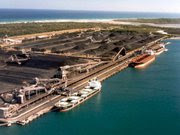
Damage at the Kashima port is not large, although some of the company's unloading cranes collapsed, a shipping company source said.(Reporting by Yuko Inoue; Editing by Joseph Radford,sourced:Reuters)

Tags : damage, Kashima Port, unloading cranes collapsed, shipping