Google Website Translator Gadget

Monday, May 30, 2011

London Mining plans Marampa first iron ore shipment in Q4

Monday, 30 May 2011

London Mining told investors that it remains on target for the third quarter commissioning of the Marampa iron ore mine in Sierra Leone, and the first shipment is expected to leave the mine in the fourth quarter of 2011.

In this morning’s operational update the group said it has made significant progress at Marampa in the year to date. Notable achievements include the completion of environmental permitting in January, securing an off-take deal with Glencore and a JORC resource update to 1 billion tonnes.

It said that phase one construct is more than 60% complete and it has now completed the pre-feasibility study for the 16 million tonne (per annum) phase two expansion.

The group acknowledged that it fell behind schedule because of delays at the Freetown Port which also coincided with public holidays but it said it has cleared the bottleneck and it will use double shifts to make up the lost time.

Meanwhile at the Isua project in Greenland a bankable feasibility study is underway and it is expected to be completed by December 2011.

The company recently completed a JORC resource upgrade which took total resources to 1 billion tonnes and it also updated the scoping study to consider a 15 million tonne per annum operation.

Elsewhere in Colombia London Mining expects first coking coal production in the fourth quarter of 2011. It is currently working on the construction of the first 60 ovens - which will provide 200,000 tonnes of coking capacity.

Worse than expected weather due to La Nina - the counterpart or opposite of the El Nino - effect has led to increased drainage costs and other costs. Also FOREX movements have also had an impact on costs. London Mining said that it currently expects the project CAPEX to be US$34 million. (sourced proactiveinvestors)

Qinhuangdao port coal throughput up 6 pct

Monday, 30 May 2011

Coal handling at Qinhuangdao port, China’s top coal loading port, increased again last in the week from May 16 to 22, up by 5.96% from a week earlier.

Qinhuangdao Seaborne Coal Market said that coal shipment from the port reached 5.39 million tonnes last week, averaging 769,300 tonnes per day. The number has been increasing for two consecutive weeks, data showed. Coal deliveries to the port via railway gained 3.9% from the previous week to 5.35 million tonnes, namely 764,600 tonnes per day.

Qinhuangdao port had 5.89 million tonnes coal in stock on average per day in the week. As of May 22, coal stockpiles at the port were 5.79 million tonnes. (sourced sxcoal)

China railways to guarantee coal supply during power crunch

Monday, 30 May 2011

China's railway authority has drawn up plans to guarantee the supply of coal to power plants over coming months as the country's worst electricity shortages in years kicks in.

According to a statement on its website, the ministry said it would ensure that rail transportation problems do not cause power restrictions and would see to it that coal was delivered to regions where inventories were currently low.

Railways delivered an average of 87,423 shipments of coal per day from May 1 to 23, and the 363 power plants directly supplied by the ministry had 31.66 million tonnes of stockpiles, which could last 13.9 days.

China's overloaded rail and road networks struggle to deliver vast quantities of coal from major producing regions in the north to big electricity-consuming provinces such as Jiangsu, Zhejiang and Guangdong in the east and southeast, where local supplies are scarce. (sourced Reuters)

Gunvor eying coking coal major Raspadskaya - Report

Monday, 30 May 2011

Reuters reported that Energy trader Gunvor is interested in acquiring Russian coal activities including coking coal miner Raspadskaya and steam coal player SDS.

The report quoted one of the sources as saying that “Gunvor is concluding the purchase of a large stake in SDS, and it could raise this further. But the ultimate goal is not SDS, but Raspadskaya.”

Gunvor, co owned by Mr Gennady Timchenko, declined to comment on the information. Its media relation representatives said the company does not comment on market rumor and speculation. (sourced from Reuters)

Coal cargo ship remains moored in Bakud Reef

Monday, 30 May 2011

Philippine Daily Inquirer reported that the cargo ship that rammed into the protected Bakud Reef off Kiamba town on May 15 remained moored as of Friday.

The Malaysian towage firm, contracted to remove the vessel, had decided to unload some 8,000 tonnes of the coal cargo to easily re float it. But the attempt proved to be slow as only about 1,600 tons had so far been transferred to a barge.

MV Double Prosperity was carrying 66,000 tonnes of coal from Australia to India when it rammed into the reef. (sourced Inquirer)

Spot coking coal prices in US unchanged - Energy Publishing

Monday, 30 May 2011

According to Energy Publishing Inc, metallurgical coal prices were unchanged last week on the U.S. market amid resistance from foreign buyers.

Spot prices for low volatility coking coal were unchanged at USD 315 a ton in the week ended while high volatility coal was steady at USD 268.33.

Energy Publishing said that “European buyers are hesitant to accept USD 315 as a global benchmark but are still working to determine exactly where the market is.”

(sourced bloomberg)

China tightens grip on Inner Mongolia before protest

May 29, 2011 3:41pm GMT
* Protest planned in the capital of Hohhot on Monday
* Major square in Hohhot under heavy security
* Top party chief meets students
By Ben Blanchard

HOHHOT, May 29 (Reuters) - Security forces sealed off parts of the capital of China's vast northern region of Inner Mongolia on Sunday to prevent residents from staging a planned protest after the hit-and-run death of a herder.

Ethnic Mongolians have been protesting for six days over the death this month of a Mongolian herder, Mergen, after being struck by a coal truck. The government announced the arrest of two Han Chinese for homicide, but that failed to stem the anger.

Hundreds of paramilitary policemen and police in riot gear, armed with shields, batons and helmets, patrolled Hohhot's Xinhua Square, next to the Inner Mongolia radio and television station, after calls spread online for a protest on Monday.

Police also surrounded Ruyi Square, in front of the local government building, but elsewhere life went on as usual.

Chinese authorities sealed off parts of the northern region of Inner Mongolia, a resource-rich region strategically located on the borders of Russia and Mongolia, on Friday in what residents described as martial law.

In a rare sign of defiance, hundreds of China's Mongolians, who make up less than 20 percent of the roughly 24 million population of the Inner Mongolian Autonomous Region, have taken to the streets in other parts of the province.

Resentment against Han Chinese runs deep.

Inner Mongolia, which covers more than a 10th of China's land mass, is supposed to offer a high degree of self-rule, but Mongolians say the Han Chinese majority run the show and have been the main beneficiaries of economic development.

China's Mongolians rarely take to the streets, unlike Tibetans or Xinjiang's Uighurs, making the latest protests highly unusual.

The New York-based Southern Mongolian Human Rights Information Centre said Mongolians were planning further protests over the next few days, including in Hohhot, less than an hour's flight from Beijing.

HEIGHTENED SECURITY

Some schools in Hohhot said authorities had stepped up security.

"The school has told us to keep an eye for any illegal gathering these days as June 4 is coming," one man in a high school in Hohhot told Reuters, referring to the armed crackdown on pro-democracy protesters on June 4, 1989, in Beijing.

"Security is tight, there are many policemen in the streets," he added. He declined to give his name.

A worker at a university in Hohhot said three entrances had been sealed off and there was a heavy police presence. He declined to comment on the reason. Telephone calls to the Hohhot government and its propaganda department went unanswered.

Police in Hohhot later detained a Reuters reporter and questioned him on why he had come to the city.

A government official then told another Reuters reporter that foreign journalists needed to apply three days in advance if they wished to report in the city. "Everything is stable in Hohhot, it is very safe here," said the official.

In the ruling party's first response to the protests, Inner Mongolia's Communist Party chief Hu Chunhua told students and teachers on Friday he was representing the government to seek their views on the situation. He said "public anger has been immense", state media reported.

"Please be assured, teachers and students, that the suspects ... will be punished severely and quickly, so that the ... rights of victims and their families can be resolutely safeguarded," the Inner Mongolian Daily cited Hu as saying.

But Hu's reassurances are unlikely to bring lasting calm, said Enghebatu Togochog of the Southern Mongolian Human Rights Information Centre.

"The conflict between the Chinese authorities' attempts to exploit the natural resources and the disrespect of the Mongolians' way of life will not be easily resolved, unless the Chinese government changes its policy," he said. (Additional reporting by Sui-Lee Wee and Huang Yan, Writing by Sui-Lee Wee,;Editing by Nick Macfie and Elizabeth Piper, sourced Thomson Reuters)

China considering domestic iron ore index - CISA official

Monday, 30 May 2011

China's steel industry body is considering launching a domestic iron ore price index to compete with the likes of Metal Bulletin and Platts.

An official told Reuters that China Iron & Steel Association which has opposed the use of foreign indexes in the setting of iron ore prices wants its own pricing mechanism to enhance its bargaining power.

Local media said CISA plans to begin with a domestic price index and extend it to imported iron ore at a later stage.

Deputy secretary general Mr Li Xinchuang told Reuters that but there is still no specific time frame for the launch of the index.

Mr Li said that "We have done a lot of research into how to make the index in order to guide both the domestic and import market, but there is no time frame yet.”

Global miners Vale, Rio Tinto and BHP Billiton abandoned a decades old annual pricing mechanism in 2010 and instead adopted quarterly contract prices based on indexes published by Metal Bulletin, Platts and the Steel Index. While Chinese steelmakers have had little choice but to accept the new pricing system, CISA has continued to question the accuracy of the big overseas indexes, saying they are vulnerable to speculation and manipulation. (sourced Reuters)

Chinese imported iron ore stocks at port cross 90 million tonne mark

Monday, 30 May 2011

According to data from industry consultancy Mysteel, inventories of imported iron ore at major Chinese ports jumped 10.7% to reach a record 92.45 million tonnes this week,

A shipping broker in east China's Shandong province said that "Many steel mills are reluctant to take their imported tonnages and are leaving their stockpiles at ports for a few days longer as they try to shun imported ore and use domestic ores to lower their costs.”

Volumes from the three major importing countries, Australia, India and Brazil, all rose by smaller margins over the week, indicating that a larger proportion of shipments have been delivered from other countries.

(sourced Thomson Reuters)

Angang Group inks pact with 3 private steel mills

Monday, 30 May 2011

Angang Iron and Steel Group Co Ltd has inked restructuring agreement with three private owned steel enterprises on May 26 in Anyang city, which will further revitalize the steel resources and improve concentration in steel industry in Henan province to strengthen its overall capacities of the steel industry.

1. Fengbao Special Steel Co Ltd
2. Xinpu Steel Co Ltd
3. Yaxin Steel Co Ltd

After restructuring, Angang Group will hold 10% stake in each of the three private owned steel mills whose later development will be integrated into the overall planning of Angang Group.

Mr Wang Ziliang president & GM of Angang Group said “After 50 year development, Angang Group has rapidly grown into a modern steel enterprise with the annual crude steel output capacity surpassing 10 million tonnes, realizing an extraordinary performance of no loss in 32 straight years and achieving net profit of CNY 0.15 billion last year.”

While the three private owned steel mills also formed their unique management model and created good economic returns during the long processes of their development, with their total crude steel capacity arriving at 5 million tonnes and net profit reaching CNY 0.166 billion by the end of last year.

The restructuring this time was approved by State owned Assets Supervision and Administration Commission, adopting the mode of “gradual stock rights integration.

(sourced MySteel)

CISA sees Chinese crude steel demand at 750 million tonnes by 2015

Monday, 30 May 2011

China Iron and Steel Association predicted that the country's annual demand for crude steel will rise to between 670 million tonnes and 750 million tonnes in 2015.

The figures are 11.8% and 25.1% higher compared with the 2010 level.

Mr Luo Bingsheng deputy chief of CISA at a forum said “The prediction based on an assumption that China's economy will register an annual growth rate between 8% and 9% during the 12th Five year Plan period (2011-2015).” (sourced from Xinhua)

NMDC Severstal JV steel project gets under way in Bellary

Monday, 30 May 2011

Deccan Herald reported that National Mineral Development Corporation Limited and Russian steel maker OJSC Severstal have started techno economic and marketing study for the proposed steel plant at Bellary in Karnataka.

Mr Rana Som chairman of NMDC told Deccan Herald that the public sector firm has entrusted MECON to conduct techno economic feasibility study of the project while Severstal has assigned Hutch to conduct marketing study of the products.

Mr Som said that NMDC and OJSC Severstal had floated a 50:50 JV company to set up a 5 million tonnes steel plant in Karnataka. The company had already given INR 55 crore to the Karnataka government for land acquisition which is to be complete by end of 2011.

Both firms would invest a total of INR 9,000 crore in the plant and it will have an initial capacity of 2 million tonne per annum expandable to 5 million tonne per annum.

Mr Som said that the JV would have its captive coking coal mining subsidiary in Russia and iron ore mining subsidiary in India to ensure long term supply of these critical raw materials.

He added that Severstal will share its latest technology for the proposed plant that would focus on producing superior grade steel used in sectors such as automobiles.
(sourced deccanherald)

Sumitomo and Hysco form auto steel pipe JV in Chennai

Monday, 30 May 2011

Sumitomo Pipe & Tube Co Ltd and Sumitomo Corporation announced that they have reached an agreement with Hyundai Hysco Co Ltd of South Korea to establish a joint manufacturing and sales venture in India for automotive steel pipe.

Profile of the Joint Venture

Name: Automotive Steel Pipe India Private Limited
Address: Chennai, Tamil Nadu State

Business description: Manufacturing and sales of automotive steel pipe

Capital: Approximately INR 400 million (JPY 700 million)
Investment amount: Approximately INR 2 billion (JPY 3.6 billion)

Shareholder composition:
Hysco Steel India Private Limited 55% (100% by Hysco)
SPT & SC Investment Co Ltd 45% (74.8% by Sumitomo Pipe & Tube and 25.2% by Sumitomo Corp)

Main facilities:
2 electric resistance welded tube mills
2 draw benches
1 heat treating furnace
3 quenching machines and other equipment

Production items:
Electric resistance welded pipe (carbon steel, stainless steel)
Cold drawn steel pipe

Production capacity: Approximately 4,000 tonnes per month

Number of employees: Approximately 350

Land area: 51,600 square meters

Factory area: 25,800 square meters

Establishment date: August 2011 (scheduled)

Production starts: End of 2012 (scheduled)

India's automotive industry is expanding rapidly thanks to the strong economic growth. With this, demand for automotive steel pipe is expected to expand, with significant growth particularly anticipated for stainless steel exhaust pipes, steel pipes for front forks, door impact beams and other high strength steel pipes as a result of tighter environmental restrictions and the growing demand for safety enhancements.

The joint venture plans to start manufacturing at the end of 2012, targeting Japanese automobile manufacturers, Hyundai Motor Company, the largest automobile manufacture in South Korea, and European and American automobile manufacturers. sourced steelguru

Miang Besar Coal Terminal on Target

Monday, 30 May 11

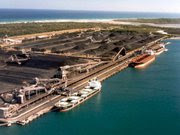
MBCT, to be largest coal terminal in Asia to start construction in Indonesia’s east Kalimantan Island in July 2011 says Mr. John Clark of Miang Besar Coal terminal during coaltrans Asia conference in Bali, Indonesia.

The coal loading terminal can load Chinamax vessels when it completes its construction by end 2013. Each China max vessel can load around 400,000 MT of Iron Ore or 250,000 MT of Coal. The terminal is being designed and constructed to accept bigger LOA vessel such as China max which is 365 meter length and 65 meter width.

According to Mr. John, currently one Chinamax or valemax vessel is operating in the world and around 30 vessels being ordered by Vale. Out of 30 vessels around 16 vessels are under construction.

Miang Besar Coal terminal is targeting to provide higher loading rates to its customers. According to terminal

According to terminal design, the terminal can loading up to 120,000 MT of coal within 24 hours. The terminal is also having capacity to store the coal up to 7.2 million tons at a time when it completes its fourth stage of construction. Terminal can handle about 40 million tons of coal by 2015, Mr. Keith, president director of MBCT says.

CIBT or Cigading International Bulk Terminal another newly born coal terminal, which is located in Java island of Indonesia, loaded its first super panamax in April 2011 and expecting to load second vessel soon. The terminal can load up to 120,000 mt DWT vessel says Keith Cowling, president director of CIBT.

CIBT is public coal terminal and being discussed with the potential coal producers to use its facilities to solve their logistic troubles.

CIBT believes that, its terminal will be the most efficient coal terminal in Java Island and can support Sumatra as well as south Kalimantan coal producers to increase their production capacity in spite of their logistics issues.

Indonesia is coming up with the new and high tech coal terminals which can support Indonesian coal producers to keep their coal prices more competitive in coming years.

If you believe an article violates your rights or the rights of others, please contact us. sourced coalspot

Friday, May 27, 2011

Turkish exploration body locates coal reserves

Friday, 27 May 2011

Turkey's mining exploration institute has recently located 2.8 billion tons of coal reserves in multiple areas. The institute is currently planning the privatization of these reserves for the construction of coal-fired power plants.

The fields will be opened to investors after detailed feasibility studies are conducted to determine potential environmental impacts and to measure the business aspects of the investments. The General Directorate of Mineral Research and Exploration, or MTA, is planning the privatization of recently located coal reserves in Turkey for the construction of coal-fired power plants. The total amount of the coal reserves is reported to be 2.8 billion tons.

According to information received by the Anatolia news agency, the Energy Ministry and Electric Generation Inc or EÜAŞ, has started feasibility studies to find the most appropriate investment method to channel the newly located coal reserves into the electricity generation sector.

Data from the MTA showed that 1.8 billion tons of the new coal reserves are in Karapınar, a district of the Central Anatolian province of Konya; 515 million tons are in the Afşin-Elbistan region of the southeastern province of Kahramanmaraş; and 498 million tons are in the Çerkezköy district of the Thracian province of Tekirdağ. According to MTA, 2.6 billion tons of the total reserves are of exploitable quality. The installation capacities of the potential power plants are 5,000 megawatts in the Konya region and around 1,000 megawatts in the other two.

On average, 1 megawatt of power can supply electricity to as many as 300 households per year. The institution is planning to open the fields to investors after detailed feasibility studies are conducted to determine the potential environmental impacts and to measure the business aspects of the investments. The Energy Ministry and EÜAŞ are considering three chief investment models to offer investors for the coal-fired power plant projects.

Ministry and EÜAŞ officials came together with private sector representatives last week. Energy Minister Taner Yıldız chaired the meeting, in which the private sector was informed about the newly located coal fields and the potential power plant investments on these fields and their opinions were solicited by the state authorities.

According to information received by Anatolia, the private sector representatives requested more incentives for such investments, particularly ministry assistance in acquiring Environmental Impact Assessment reports from the Environment and Forest Ministry, something they said was the hardest part of their operations. Some private sector representatives asked for a purchase guarantee from the government authorities.

(sourced Hurriyet Daily News)