Mar09,2011 Reuters
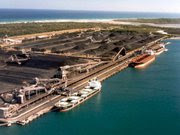
China could be producing as much as 4 billion tonnes of coal by 2015, up from an estimated 3.2 billion last year, the head of one of China's leading coal firms said on Friday.
Wu Yongping, the chairman of Datong Coal Mine Group, the country's third biggest producer, said despite China's efforts to reduce its dependence on coal, the dirtiest of fossil fuels, it would continue to play a dominant role in China's energy mix.
"I can't see coal's position in China's energy demand changing very much in the short term," he told reporters on the sidelines of the National People's Congress in Beijing.
He said coal output was likely to continue growing at the same pace as the economy as a whole, and Datong Coal, parent of the Shanghai-listed Datong Coal Industry Company Ltd (601001.SS: Quote), was planning to raise output to 200 million tonnes a year by 2015, up from 113 million in 2009.
China is expected to cap energy consumption at 4 billion tonnes of coal equivalent (TCE) by 2015, Xinhua news agency quoted the country's former energy chief Zhang Guobao as saying on Friday.
An energy cap would likely restrict growth in coal output, which accounts for about two thirds of China's overall energy mix, but Wu said there was no conflict between the coal sector and state energy efficiency goals.
"The target for production in the coal sector is actually in line with the government plan," he said.
While China will remain dependent on coal for many years to come, the company still plans to diversify, Wu said.
Datong Coal Mine plans to invest 27.4 billion yuan ($4.17 billion) in new energy projects over the next five years, including polysilicon and solar battery production, he said. ($1=6.571 Yuan)
Showing posts with label Wed Mar09 2011. Show all posts
Showing posts with label Wed Mar09 2011. Show all posts
Thursday, March 10, 2011


Wednesday, March 9, 2011
Profit-taking ends rally in Central Appalachia OTC thermal coal
Mar09, 2011/519 am EST/1019 GMT
Washington (Platts) - Central Appalachia over-the-counter thermal prices ended their five-day winning streak Tuesday, as low trading volumes in the session probably signified some profit taking, one source said.
Price assessments were taken down along the entire forward curve, with the CAPP barge front months back in contango.
CAPP barge April prices dropped $1.75/st to $71.50/st, while May contracts were reduced by $1.25/st to $71.75/st.
CAPP barge Q2 2011 traded at $71.70/st for five barges. Q3 2011 traded at $73/st for five barges. Q4 2011 traded at $75/st for five barges twice.
CAPP barge Q2 2012 traded at $79.15/st for five barges.
A CAPP barge spread trade was also reported: Q3 2011 over Q4 2011 traded at a discount of $2/st for five barges twice.
In the thinly traded CAPP rail (CSX) physical market, April 2011 traded at $69.50/st for six trains, and at $69.75/st for one train.
Front month CSX physical contracts dipped $1.75/st to end the session at $69.50/st.
Powder River Basin product in the West, which has been less correlated to economic cycles, traded modestly lower during the session. April 8,800-Btu/lb prices declined 5 cents/st to $13.60/st.
PRB April 2011 physical traded at $13.50/st, and $13.60/st, each for one train. Q2 2011 physical traded at $13.85/st for one train twice.
No trades were reported on the Intercontinental Exchange electronic trading platform.
--By Chuck Noh,sourced Platts
Anglo-American settled coking coal contracts with Japanesemills at US$330/t FOB (+47% QoQ) v/s expectation of US$325/ton
Iron ore softens amid weak steel market; coking coal contracts up 47% - Motilal Oswal
Wed, Mar09, 2011 03:03:32
Steel prices in most regions softened during the week. Indian CR grade HRC declined 0.5% WoW and commodity grade HRC was flat.
Spot iron ore prices declined 7% WoW. India's increasing export duty on iron ore fines from 5% to 20% did little to support iron ore prices.
According to media reports, Anglo-American settled coking coal contracts with Japanese mills at US$330/t FOB (+47% QoQ) v/s expectation of US$325/ton.
New prices will hit the P&L of steel companies with a lag of one or two quarters depending on spacing of contacts.
We expect margins to expand in 4QFY11 and remain superior in 1QFY12 followed by compression in 2QFY12.
JSW Steel reported crude steel production of 541,000, an increase of 8% YoY. This is marginally lower than our expectation. Production of HRC and rolled products was robust, and long products appear to be weak. Base metal prices increased 2-3%. Aluminum prices rose on falling inventories. Copper declined on rising oil prices and escalating violence in North Africa.
(Source: Equity Bulls)
Tags : Japan steelmakers, raw material, steel mills
Libya's Zarti files suit over Austrian asset freeze
Libya's Zarti files suit over Austrian asset freeze
VIENNA | Wed Mar 9, 2011 11:34am EST
VIENNA (Reuters) - A former official at Libya's sovereign wealth fund has asked Austria's top court to release his assets that Vienna froze in a hunt for offshore wealth of Libyan leader Muammar Gaddafi and his inner circle.
Attorneys for Mustafa Zarti, 40, filed an appeal on Wednesday with Austria's Constitutional Court against the March 4 asset freeze order from the central bank, a spokesman for Zarti said, confirming a report by the Austria Press Agency.
The legal action seeks the immediate release of his assets because the order was based on false media reports, the spokesman said.
Austria last week added Zarti, former deputy head of the Libya Investment Authority (LIA) sovereign wealth fund, to its blacklist of suspected Gaddafi cronies, calling him a "close confidant of the regime in Libya."
Zarti has told Reuters he resigned on February 24 from the LIA, three days after coming to Austria to spend a holiday break with his family.
Zarti, who has an Austrian passport and lived for years in Vienna as a youth, has denied any links to the Libyan leader's clan other than Gaddafi's son Saif al-Islam, whom Zarti called a long-time friend.
The European Union agreed on Tuesday to add the LIA and several other financial organisations to its sanctions list.
(Reporting by Michael Shields; Editing by Elizabeth Fullerton, sourced:Reuters)
Mercator to boost Indonesia coal output
Wed Mar 9, 2011 9:12am GMT
* Mercator traded 4 million tonnes Indonesian coal in 2010
* Oorja mine reaches 1.5 million tonnes output
* New high quality coal mine will add 2 million tonnes
NEW DELHI, March 9 (Reuters) - India's Mercator Lines Ltd (MRCT.BO: Quote) is to boost its Indonesian coal production to 3.5 million tonnes a year with a new mine, a Mercator executive said on Wednesday.
Speaking on the sidelines of a Coaltrans conference in New Delhi, he said Mercator's Ooorja mine in Petangis, East Kalimantan had also grown its output to 1.5 million tonnes a year of 5,400 GAD coal, which is largely shipped to India.
"We traded 4 million tonnes of Indonesian coal last year including our own mine production, the rest we bought from smaller players," the Mercator executive said.
"We mostly sell to traders who then export, only about 30 percent of our output is sold directly to Indian end-users," he said.
The new mine will begin operations this year and produce 2 million tonnes a year of 6,000 GAD coal.
The mine has 40 million tonnes of reserves, he added.
Mercator, India's second-largest private shipping firm, diversified into coal mining four years ago.
"The quality of coal we are producing is ideal for the Indian market but the new mine has higher quality coal, which could go to India or elsewhere in Asia," he said.
Mercator has mostly shipped in 50,000 tonne vessels but because it is one of the world's largest owners of gear grabber panamax vessels the company plans to graduate to panamax loading.
"This gives us a freight advantage with costs," he said.
(Reporting by Jackie Cowhig; Editing by Alison Birrane,sourced Thomson Reuters)
Moody's further downgrades six Greek banks, after credit rating of Greece

Wed, Mar09, 2011 19:16:04
ATHENS, March 9 (Xinhua) -- International credit rating agency Moody's proceeded Wednesday to the downgrade of six Greek banks, two days after reducing for once again over the past year the credit rating of Greece by three notches which caused a strong reaction by the Greek government.
This time the announcement did not come as a surprise in Athens and local bankers appear reassuring that the Greek banking sector which has also been hit by the severe debt crisis that broke out in late 2009 in the country, can stand the pressure.
Moody's downgraded with a negative outlook from Ba3 to Ba1 the National Bank of Greece, Eurobank, Alpha Bank and Piraeus Bank. Moreover, downgraded with negative outlook from Ba2 to B1 the Agricultural Bank of Greece and Attica Bank.
The agency argues that the decision was taken based on the latest assessment of the worsening credit rating of Greece which will have an impact on the sector, as well as the review of their financial strength and increasing challenges regarding liquidity.
Representatives of the Greek banking system reply that the sector can overcome the downgrade and the crisis through the 30 billion euro (41.67 billion U.S. dollars) guarantee aid package of the Greek state. They argue that despite the assessments by international rating agencies, the European Central Bank will continue to accept as normal Greek state bonds.
Moody's announcement that downgrades the credit rating of Greece from BA1 to B1 with a negative outlook Monday, due to doubts that the efforts under way to solve the crisis could prove inadequate to avoid an eventual restructure of the Greek debt, was strongly criticized by Athens.
The decision was "unbalanced and unjustified" and proves the need for better regulation of international ratings agencies, said the Greek Finance Ministry.
Zimbabwe to take controlling stake in mines

Wed Mar 9, 2011 1:25pm GMT
* New rules to take effect next week
* To establish sovereign wealth fund for 51 pct stakes
* Move seen as strong-armed negotiating ploy
By Alfonce Mbizwo
HARARE, March 9 (Reuters) - Zimbabwe will effectively nationalise half of the country's key resources sector by setting up a sovereign wealth fund to own 51 percent stakes of mining companies, a government minister said on Wednesday.
Saviour Kasukuwere, minister of youth empowerment and indigenisation, said the government in the resource-rich country would publish guidelines on local mine ownership regulations on Friday and the rules would take effect within a week.
Analysts said impoverished Zimbabwe does not have the money to buy controlling stakes but is likely using the threat to force global mining giants to the bargaining table so the country with the world's second-largest platinum reserves can receive more money from its mineral riches.
The move is likely to discourage foreign investment and will hit foreign miners in the state including AngloPlat (AMSJ.J: Quote) and Impala Platinum (IMPJ.J: Quote), the world's largest and second largest platinum producers, and Rio Tinto (RIO.L: Quote), which runs a diamond mine in the country.
"In the mining sector specifically, we have been getting a raw deal all this time with companies taking money out of the country," Kasukuwere said, without offering details of the plan.
Kasukuwere said earnings from mineral exports reached $1.7 billion in 2010, about 30 percent of the country's estimated yearly GDP, but that mining companies had only paid $4 million in taxes to the government.
"The signal that they are sending is that 'we can change anything in this country and it can impact on investment at any time'," said Claude Kabemba, director of Southern Africa Resource Watch.
"Their push will be incremental. If they are serious about the 51 percent, they must start somewhere," he said. "They might negotiate a very low price to start and on top of that negotiate a repayment strategy."
President Robert Mugabe signed the Indigenisation and Economic Empowerment Act in 2008 and the government has issued regulations of how foreign-owned companies should achieve at least 51 percent black ownership within five years.
Mining firms may decide to pull out of the country but they risk losing rights to the massive platinum reserves and other minerals as mining companies from Mugabe's biggest backer China wait in the wings, perhaps looking to take over the claims.
Mugabe, shunned by Western governments who suspect him of using violence and rigged elections to stay in power, has seen overseas aid dry up and investment deterred as his destitute country has faced greater global isolation.
Kasukuwere said not all sectors would be required to sell 51 percent shares, citing the manufacturing industry which he said was still fragile and needed more time to recover. Analysts said years of mismanagement by Mugaba'e ZANU-PF has only made things worse for an economy that was crushed by hyperinflation a few years ago.
Mugabe is pushing for elections this year and could be looking for cash as he fights political rival and unity government partner, the Movement for Democratic Change (MDC).
The MDC forced into a power-sharing government with Mugabe after disputed 2008 elections, have been campaigning for foreign investment to add strength to a nascent economic recovery that came after the unity government was formed.
MDC officials have also tried to ally concerns about the law that the government said was aimed at addressing the unresolved economic imbalances left by decades of white minority rule, and would ultimately create a stable economy and fair society.
But foreign companies regularly cite the law as their main concern about investing in the southern African country.
Shares in Zimplats Holdings (ZIM.AX: Quote), a unit of Implats, is down nearly 20 percent since the start of this month and the company said in a statement to the Australian Stock Exchange the fall could be attributed to news around the new ownership rules. (Additional reporting by MacDonald Dzirutwe in Harare and Olivia Kumwenda in Johannesburg; Editing by Jon Herskovitz and Jason Neely, sourced Thomson Reuters)
Brazil wants Vale to pay $2.4 bln royalties-report

Wed Mar 9, 2011 2:41pm GMT
* Company does not agree with debt value, Folha says
* Dispute could reignite tensions between CEO and gov't
SAO PAULO, March 9 (Reuters) - Vale, the world's largest iron ore producer, could be forced to pay up to 3.9 billion reais ($2.4 billion) in back royalties to the Brazilian government, the newspaper Folha de S. Paulo said on Wednesday.
The Mines and Energy Ministry's mining oversight unit claims there are loopholes in the way royalties are calculated and that Vale has paid too little for extracting iron ore from Minas Gerais and Para states, Folha said. It did not say how it obtained the information.
Vale (VALE.N: Quote) (VALE5.SA: Quote) does not agree with the ministry's assessment and says any back royalties would total not more than half of the ministry estimate, Folha said, citing an official who declined to be quoted by name.
No one at Vale's office in Rio de Janeiro was available to comment.
The dispute over royalties has sparked worries among Vale officials that the company's license to explore for the mineral in Carajas, the world's biggest iron ore mine, could be revoked, Folha reported.
Vale Chief Executive Roger Agnelli and Mines and Energy Minister Edison Lobao have discussed the issue in recent days and might meet in Brasilia for talks, Folha added.
The royalties dispute could reignite tensions between Agnelli and the government. According to the accounts of people familiar with the situation, some political leaders sought to push Agnelli out of the CEO job during the administration of former President Luiz Inacio Lula da Silva.
Some of those officials claimed at the time that Vale ought to invest more in industries such as steelmaking and infrastructure, a move that could put Vale at the center of a conflict of interest with its biggest clients -- steelmakers.
President Dilma Rousseff's administration and Congress are considering changes to the mining law, including higher royalty payments and tougher oversight.
Vale is a former state-run company that was privatized in the 1990s, though the government still retains control of the firm's voting shares through the state development bank and state-linked pension funds. ($1 = 1.645 real) (Writing by Guillermo Parra-Bernal and Inae Riveras; editing by John Wallace, sourced Thomson Reuters)
Dubai Stocks Tumble to World's Cheapest as ING Says Buy

Mar 9, 2011 4:26 PM GMT+0530
By Michael Patterson and Zahra Hankir
Growing unrest in the Middle East sent Dubai stocks to the cheapest level in the world relative to company assets, a signal to ING Groep NV and Charlemagne Capital Ltd. that shares in the region’s financial hub are worth buying.
The Dubai Financial Market General Index’s 13 percent drop this year left it valued at 0.6 times net assets, or book value, a 67 percent discount to the global average and the least since Bloomberg began compiling the data four years ago. Emirates NBD PJSC (EMIRATES), the United Arab Emirates’ biggest bank by assets, fetches 3.15 dirhams ($0.86) even after the company said last month its book value was about 6.06 dirhams a share on Dec. 31.
Stocks sank as protests that unseated governments in Egypt and Tunisia spread across the Middle East, threatening to slow growth in Dubai, the regional headquarters for global firms from Goldman Sachs Group Inc. (GS) to Morgan Stanley. The emirate’s 0.4 percent inflation rate and 0.8 percent unemployment set Dubai apart, reducing the likelihood of turmoil and presenting opportunities for investors, ING and Charlemagne Capital say.
“Worst-case scenarios are being priced in,” said Mark Krombas, a London-based money manager at Charlemagne Capital, which oversees about $3.5 billion in emerging markets. “For those who are brave and for value investors with patience, there are very strong opportunities.”
Relative Value
The DFM index jumped 2.2 percent to 1,443.28 today for the biggest advance among world equity indexes. The MSCI Emerging Markets Index climbed 0.2 percent as of 10:23 a.m. in London.
Share prices may rally back above book values in the next few years as an expanding regional economy helps boost Dubai’s return on equity, Krombas said. The gauge of how much companies earn for each dollar invested has rebounded to 9.1 percent from a low of 3.2 percent at the end of 2009, according to data compiled by Bloomberg. That compares with a peak of 28 percent in November 2007.
The DFM index trades for 5.7 times analysts’ 12-month earnings estimates, the lowest level worldwide and 30 percent below the average of 8.1 times during the past four years, according to data compiled by Bloomberg. Companies in the index pay dividends amounting to 4.1 percent of their share prices, almost double the 2.2 percent dividend yield on the MSCI Emerging Markets Index.
Volatile Market
“The extent of the undervaluation is greater here than anywhere else and it does indicate a lack of confidence in Dubai,” said Paul Cooper, Dubai-based managing director at Sarasin-Alpen & Partners Ltd., which oversees more than $500 million in the Middle East. “Investors are not basing their decisions on fundamentals or valuations but rather a fear of the unknown.”
Swings in investor sentiment during the past five years have made Dubai one of the world’s most volatile equity markets. The DFM index’s 90-day volatility, a gauge of share-price swings, is the seventh-highest among major emerging and developed markets tracked by Bloomberg after climbing to 22 from 15 at the end of January.
The DFM index surged 493 percent between 2003 and 2007, with shares trading for as much as 3 times book value, as the government and state-owned companies borrowed more than $100 billion to create a business and tourism hub that’s home to the world’s tallest skyscraper and palm-shaped islands off its coast.
Protests Spread
The benchmark equity gauge lost 72 percent the following year as the global financial crisis shut off access to credit and sparked a 62 percent plunge in Dubai real-estate prices. Dubai World, a state-owned holding company, rocked global financial markets in late 2009 after saying it would have to restructure debt.
The DFM index tumbled to the lowest level since 2004 last week after popular protests that toppled leaders in Tunisia and Egypt spread to Bahrain, Yemen, Iran and Oman, which shares a border with the U.A.E. Libyan rebels seeking to end Muammar Qaddafi’s 41-year rule have clashed with security forces in a conflict that’s left 6,000 people dead, Abdullah al-Mahdi, a spokesman for opposition forces, said on March 5.
Some websites have called for “Day of Rage” in Saudi Arabia on March 11 and March 20, Human Rights Watch said Feb 28.
There’s “nervousness that the Libya situation escalates across the region,” said Jeff Chowdhry, the London-based head of emerging-market equities at F&C Asset Management Plc (FCAM), which manages about $163 billion worldwide. “There’s been a big correction, but there’s no stock that I’ve done work on in the Middle East today that appeals to me on a valuation level. For that value to emerge for me, the markets would have to move down more than 30 percent from current levels.”
Crisis Valuations
Equity valuations have declined below Dubai’s levels in countries facing financial and political upheaval.
In the U.S. banking crisis two years ago, the Standard & Poor’s 500 Financials Index sank to as low as 0.5 times book value, and shares didn’t rally until after the companies got about $650 billion of fresh capital injections, according to data compiled by Bloomberg. Russian equities fell to 0.2 times net assets in October 1998 after the government defaulted on $40 billion of domestic debt, according to MSCI Inc. (MSCI)
Thornburg Investment Management’s Lewis Kaufman says he’s finding better opportunities to buy stocks in developing nations including China that have faster growth than the Middle East and aren’t surrounded by political turmoil.
Less Risk
“I can participate in new opportunities in a lot of other markets that have suffered from inflation pressures but don’t have anywhere near the same degree of downside risk from geopolitical contagion or unrest in their own backyard,” said Kaufman, whose holdings include Daphne International Holdings Ltd. (210), a Shanghai-based shoe retailer that’s retreated 9.6 percent this year and trades for 4.6 times book value, down from a peak of 16 times in April 2007.
His Thornburg Developing World Fund has outperformed 97 percent of peers in the past year.
Dubai’s economy, which expanded 2.5 percent in the first nine months of 2010, doesn’t share the combination of high inflation and unemployment that fueled protests in Egypt and Tunisia.
The emirate’s laws requiring dismissed workers to leave the country within 30 days of employment visas ending sent the jobless rate to 0.8 percent in 2009, compared with about 9 percent in Egypt. The Dubai Statistics Center hasn’t yet compiled last year’s unemployment figures. Egypt’s 11 percent inflation rate is about 27 times faster than Dubai’s, according to government data.
Berlin Wall Moment
While Fitch Ratings cited the drag on economic growth from protests in Bahrain and Egypt for credit downgrades this year, the International Monetary Fund predicts political reforms following the unrest will lead to higher long-term expansion rates in the region. Jim O’Neill, the chairman of Goldman Sachs’s asset management unit in London, said in a Feb. 14 interview on Bloomberg Television that the popular uprisings resemble the collapse of the Berlin Wall two decades ago and may boost growth by opening Middle Eastern countries to world trade.
“Economic prosperity is enhanced when you move from closed economies to open economies,” said Fadi Al Said, a Dubai-based senior investment manager at ING Investment Management, which oversees about $518 billion worldwide. His ING L Invest - Middle East & North Africa fund beat 88 percent of peers in the past year, according to data compiled by Bloomberg. “It sets up a very positive environment for businesses to blossom,” he said.
Default Swaps
Dubai’s dollar-denominated sukuk bonds have returned 1.5 percent this year, while credit default swaps insuring against nonpayment by Dubai climbed 30 basis points, or 0.3 percentage point, to 445, according to data provider CMA in New York. The increase compares with a 130 basis-point jump to 372 for Egypt.
Dubai’s debt isn’t graded by credit rating companies, though neighboring Abu Dhabi is rated Aa2 at Moody’s Investors Service, the third-highest investment-grade ranking. Abu Dhabi, one of the U.A.E.’s seven sheikhdoms along with Dubai, provided a $10 billion bailout for Dubai World in December 2009.
Fitch cut Egypt’s credit rating to BB, two levels below investment grade, from BB+, the agency said in a statement on Feb. 3. Moody’s reduced the North African country by one step to an equivalent Ba2 on Jan 31.
There are signs that profit growth in Dubai is accelerating as the global economy expands. Emirates NBD said on Feb. 10 that fourth-quarter earnings more than doubled, beating analysts’ estimates, as loan-loss provisions declined. The stock is trading 15 percent below the average 12-month price estimate of five analysts compiled by Bloomberg.
Attractive Valuations
Emaar Properties PJSC (EMAAR), builder of the world’s tallest tower, said on Feb. 10 that fourth-quarter revenue increased to about 3.8 billion dirhams from 2.98 billion billion dirhams while operating profit was little changed from a year earlier. The stock closed at 2.56 dirhams yesterday, or 50 percent below the company’s reported book value of 5.10 dirhams a share, data compiled by Bloomberg show. The average 12-month price forecast for the stock is 4.94 dirhams, according to nine estimates compiled by Bloomberg.
“The sharp decline in stock prices have resulted in very attractive valuations in Dubai,” said Yong Wei Lee, who helps oversee about $1.2 billion as a senior fund manager at Emirates NBD Asset Management in Dubai. “As long as stability returns to this region, then over the medium to long term, buying stocks at current levels should provide attractive returns.”
Gold rises as MidEast, euro quell risk appetite

Wed Mar 9, 2011 12:50pm GMT
* Gold edges up, Middle East, euro zone in focus
* China adviser says Beijing should buy more gold
* Coming Up: Germany Industrial output Jan; 1100 GMT
By Amanda Cooper
LONDON, March 9 (Reuters) - Gold rose on Wednesday, supported by investor concern over the violence across the Middle East and the resurgence of discomfort over the euro
zone's finances ahead of a key summit this week.
Crude oil arrested a two-day slide as worries about the turmoil in the Arab world, where pro-democracy protests are spreading from Libya to Yemen and Kuwait, outweighed
reassurances from OPEC of ample spare capacity.
The euro fell below its recent four-month highs against the dollar, as investors shifted their attention away from the prospect of an imminent rate rise to the region's debt problems,
which leaders from the single currency bloc will discuss at a summit on Friday.
Euro-priced gold XAUEUR= was set for a fourth daily rally, its strongest run in two months.
Gold priced in dollars XAU= rose 0.4 percent to $1,433.30 an ounce by 1224 GMT, reversing the net loss for the week, which would have been the first since late January.
COMEX April futures GCJ1 rose 0.5 percent to $1,433.90. "I could see (the price) down another $10 but you have to continue buying," said ANZ head of metal sales Peter Hillyard.
"There are bigger macro issues, to do with economies and recessions and double-dips and the Middle East. There are enough bullish factors in play that if it isn't one, it will be another
and on balance, the market is looking for those bullish signs."
ETFS RISE
Reflecting investor appetite for gold was another pickup in holdings of the metal in some of the world's largest exchange-traded funds, which have risen by over 340,000 ounces
so far this week to over 61 million ounces.
Gold has risen by nearly 10 percent in the last seven weeks, since protests in Tunisia and Egypt spread to other parts of the Middle East and North Africa, triggering a 20-percent rise in
crude oil and raising concern over the chances of an oil-price shock to the global economic recovery.
The price hit a record $1,444.40 an ounce on Monday and has since retreated by about 1 percent from that level, in line with the drop in the oil price, which often trades in tandem with
gold, especially if investors are seeking safe-haven assets.
"I feel it is consolidating, waiting for any lead out of Libya. We'll see what happens on (Friday) prayer day around the Gulf, and then we'll see whether or not there is need for
concern. I think that's the focus we have to follow," said Jonathan Barratt, managing director of Commodity Broking Services in Melbourne.
"If nothing happens on Friday, then I feel it will be a sigh of relief that the contagion won't actually spread. As a result of that, if we don't see it spread, then gold would come under
pressure."
Tensions in Libya remained. Tanks and warplanes intensified their offensive against rebels on Tuesday, as the United States stressed that any no-fly zone to hobble Muammar Gaddafi's forces had to have global backing.
Separately, a Chinese government adviser was quoted by local media reports as saying that the second largest consumer of the precious metal should use some of its $2.85 trillion foreign
exchange reserves to buy more gold.
"Another supportive factor for gold demand and therefore gold prices are likely to be repeated calls for the diversification of China's currency reserves," said Commerzbank analysts in a daily note.
Silver rallied for a fourth day, rising 0.6 percent to $36.22 an ounce, supported by the gains in gold and the ongoing backwardation across the silver futures curve <0#si:>, as well as by continued inflows into ETFs.
Platinum XPT= rose 0.6 percent to $1,813.62 an ounce, while palladium XPD= gained 0.9 percent to trade at $796.47. (Additional reporting by Lewa Pardomuan in Singapore; editing
by James Jukwey, sourced :Thomson Reuters)
New Zimbabwe mine ownership rules effective next week

Wed Mar 9, 2011 9:29am GMT
HARARE, March 9 (Reuters) - Zimbabwe's new mine ownership rules which will require mining companies to give up 51 percent stakes to the government will be effective seven days after their official publishment on Friday, a minister said on Wendesday.
"The rule will be effective seven days after it is gazetted," Saviour Kasukuwere, Minister of Youth Empowerment and Indigenisation, told Reuters on the sidelines of an investor conference.(Reporting by MacDonald Dzirutwe, Editing by Agnieszka Flak,sourced:Thomson Reuters)
Eastern Canada’s iron ore belt drawing new interest

Mar08,2011 7:07AM EST
Forget about gold, copper, and other hot commodities. There may be money-making potential in a much more mundane item: iron ore.
Like its better-known commodity cousins, the key steel-making ingredient has also been on a tear, an upward price move that is attracting new attention to one of Canada’s oldest mining plays, the iron-ore laden area straddling the boundary between Quebec and Labrador.
he possibility that Eastern Canada could become a global heavyweight in iron ore production - a domestic version of the current behemoths in the mineral such as Brazil and Australia - is beginning to make the rounds on Bay Street as an investment idea with big promise.
The concept was highlighted Monday by news that India’s Tata Steel Ltd. had agreed to a deal worth up to $4.85-billion to develop deposits in the region owned by New Millennium Capital Corp. In January, another company active in the area, Consolidated Thompson Iron Mines Ltd. (CLM-T17.150.030.18%), received a $4.9-billion takeover offer from Cliffs Natural Resources Inc. (CLF-N96.700.930.97%)
Such big-dollar expressions of interest are leading many brokers and mining newsletters to begin touting the entire area as an investment possibility that will profit from the burgeoning market for the distinctive, red-tinted ore.
Desjardins Securities, for instance, recently hosted a conference featuring the potential of the area, suggesting it could be producing more than 100 million tonnes of ore annually, or about triple current levels, by 2020. Desjardins doesn’t have any current picks, but its two most recent in the sector - Consolidated Thompson and Baffinland Iron Mines Corp. (BIM-T1.49----%) - were subject to takeover offers. “Everything we covered got taken out,” says the firm’s base metals analyst John Hughes.
An added attraction is that the ores being discovered are about 15 per cent richer than those in Australia, a huge plus for a bulky commodity that is costly to ship, according to Mr. Hughes.
One firm that has a pick in the region is Jennings Capital, which has pegged Labrador Iron Mines Holdings (LIM-T13.55-0.44-3.15%) as a speculative buy with an $18 target. Reflecting the dramatic recent investor interest in the sector, shares of the emerging producer are up to about $14, from less than $4 as recently as July.
Newsletter writers at the Hard Rock Analyst have also been intrigued, saying last month that “Canada’s main iron belt is now joining the list [of] mining districts where those of us who track the sector are getting excited by the prospects for a many-fold increase in production to meet Asia’s growth needs.”
Geologists have known for decades that the region - known in the profession as the Labrador Trough - has iron resources. After all, the metal has been mined since the mid-1950s, starting at the Iron Ore Co. of Canada’s operation at Schefferville, Que.
But the area languished after its 1950s heyday, until the emergence of China and India as major consumers of steel made miners scour the globe to feed the Asian economic giants’ appetite for raw materials.
Top Picks
There are six juniors followed by analysts as possible producers in the region, adding to Labrador Iron Ore Royalty Corp. (LIF.UN-T75.950.891.19%), a long established way to play the sector, and New Millennium, which announced the deal with Tata Steel.
The publicly-traded company closest to becoming a producer is Labrador Iron Mines. The company expects to have its mine near Schefferville in operation in April, a development that caused Jennings Capital to raise its target.
Adriana Resources Inc. (ADI-X1.430.118.33%) has one of the largest iron reserves in the area, with an estimated 1.5 billion tonnes of iron in the ground, according to an estimate issued last week by Desjardins. The company also has announced a strategic partnership with Wuhan Iron & Steel Corp., a major plus considering the high capital costs of developing new mines. As part of the arrangement, the Chinese steel maker has taken a 19.9-per-cent interest in Adriana.
Advanced Explorations Inc. (AXI-X0.690.011.47%) is also part of the rush to develop mines in Eastern Canada, although it’s also exploring Melville Peninsula in Nunavut. According to its presentation at the Desjardins conference, the company has enough ore for a 50-year operation based on current resources.
Another junior active is Alderon Resource Corp. (ADV-X3.72-0.09-2.36%) It’s currently conducting a drilling program to determine the size of the resources on its iron ore project.
Champion Minerals Inc. (CHM-T2.690.083.07%) has two major deposits and a smattering of smaller ones that were explored during the 1960s. It has total reserves of more than 1.2 billion tonnes grading about 30-per-cent iron.
At the northern end of the Labrador Trough, Oceanic Iron Ore Corp. (FEO-X0.820.022.50%) is hoping to strike it rich in the Ungava area of Northern Quebec. Its properties were scouted during the 1950s and 1970s, but because of the remoteness of the area, were never developed.
Mr. Hughes says iron ore prices are likely to be strong for years due to rising Asian demand and the slow pace at which new mines come on stream, a plus for the companies looking for the metal. “We just don’t see a quick fix to fill that [supply] deficit in the market over the next several years,” he said.
Labrador Trough iron ore developers comparative valuation table
| Company | Market Cap ($ mil.) | Iron Ore Resources (millions of tonnes) | Company-owned iron in the ground (millions of tonnes) | Mkt. Cap/tonne of iron in the ground ($) |
| Labrador Iron Mines | 619 | 137 | 79 | 7.80 |
| Adriana Resources | 115 | 12,578 | 1,563 | 0.07 |
| Alderon Resource | 284 | 700 | 217 | 1.31 |
| Advanced Exploration | 96 | 360 | 50 | 1.90 |
| Oceanic Iron Ore | 119 | 2,683 | 877 | 0.14 |
| Champion Minerals | 170 | 603 | 144 | 1.18 |
Source: Desjardins Securities, Bloomberg
Tags :metal analyst, Labrador Iron Mines, raw material, steel mills, take over, Cliffs Natural,India to face huge coal shortage by 2021-22

New Delhi, Mar09, 2011
The Government today admitted that the country will face a huge shortfall of 269 million tonnes of coal by 2021-22 as the coal producing entities have failed to keep pace with the demand as well as economic growth.
“In the last 8-10 years, the economy grew at a much faster pace compared to coal production even as the Coal India Ltd registered a growth of 7-8 per cent. We are trying to adopt different technologies which are more efficient in coal usage to meet the demand,” the Coal Minister, Mr Sriprakash Jaiswal, said in the Lok Sabha during Question Hour.
According to estimates, demand for coal in 2021-22 is projected at 1,353 mt against the production assessment at 1,084 mt, leaving a shortfall of 269 mt.
“In view of the widening demand-supply gap of coal, the country is unlikely to become self-reliant in meeting the demand of coal indigenously in the near future,” Mr Jaiswal said.
He also informed the House that several states were allocated coal blocks more than five years ago but
they are yet to begin production.
Chhattisgarh was allocated nine coal blocks more than five years ago, Maharashtra was given seven blocks and Madhya Pradesh 10 blocks, he said adding that unfortunately production has not begun at any of these blocks.
Replying to a supplementary on whether irregularities in allocation of coal blocks have come to the notice of the Government, Mr Jaiswal replied in negative. He also said that now coal blocks are allotted only through competitive bidding and there was no possibility of any wrongdoing.
In view of India producing only 10 per cent of good quality coal, it has been placed under Open General Licence scheme so that industries such as sponge iron, steel and power producers could import good coal according to their demand.
Iron ore duty hike will temper steel price rise - Mr Sajjan Jindal

Wed, 09 Mar 2011 By BL
Mr Sajjan Jindal vice chairman and MD of JSW Steel said that though coking coal and iron prices are on a high, any further hike in steel prices could hurt demand in the country and that the budget proposal to increase the iron ore export duty to 20% should alleviate some concerns and lead to drop in prices of around INR 1,000 a tonne in the next two three months.
Mr Jindal said that “With the economy and manufacturing sectors growing rapidly, demand is bound to grow, but the ability to absorb further price hikes is limited and prices will rise in the short-term. But the Government has done a very good thing by proposing the export duty on iron ore at 20%. It will increase availability of iron ore for domestic companies and prices could come down by as much as INR 1,000 a tonne over the next 2 to 3 months.”
Orissa Government to renew MoU with Posco says Minister Raghu Nath Mohanty
Wed, March 09, 2011
Bhubaneswar: Odisha Government will renew the Memorandum of Understanding (MoU) with POSCO for setting the `52,000 crore Steel Mill near Paradeep in Jagatsinghpur district. It was announced by Steel and Mines Minster Raghu Nath Mohanty. And this time the process has been started to extend the deal period for a six years instead of five years.
He indicated that the renewal of the MoU was in advance stage of finalisation and would be put in place soon. With the Union Ministry of Environment and Forest on January 31 giving Clearance with conditions for the setting up of the controversial multicrore POSCO steel mill and the captive port, the biggest FDI in the country, the Odhisa Government had initiated steps to regularise the deal to help start the work. The conditions put-forth by the MoEF for the proposed integrated POSCO Project were also examined thoroughly and soon all the points would be Complied with soon, said that Minister of Steel and Mines.
He indicated that the compliance is likely to be made within next three days to the MoEF. Stating that the project would herald a new area of industrialisation and economic growth in Odisha and the country as well, Industry Minister said that the state government had already formulated a new recruitment policy for the ongoing and upcoming industries with the main thurst of more employment of locals.
He said that the same would be applicable to POSCO. As per the new Police, 90 per cent of the required semi-skilled and un-skilled worked would be provided employment in the POSCO.
Similarly, 60 per cent of the skilled jobs would be reserved for the locals and in Managerial posts 30 per cent of the local people would be provided jobs in the project, he said.
The MoU signed on 22nd June 2005 between the Government of Odisha and POSCO for a period of five years had already lost its validity since August 2010.
Orissa based steel mills meet CM for iron ore solution
Wed, 09 Mar 2011
TNN reported that steel makers in Orissa have demanded the state government should ensure raw material availability at a reasonable price.
As per report, senior persons from several companies, which have set up shop in the state, met Orissa chief minister Mr Naveen Patnaik and sought redress of their grievances.
They complained about problems in accessing iron ore shortage a regulated price and said unless the state government sorted out issues the companies would continue to suffer.
The steel companies urged the state government to facilitate lease of iron ore mines to them in tune with the MoUs signed for establishment of steel mills. They even suggested the state government to ban or restrict export of raw materials to other states and abroad.
The state government should evolve a mechanism to regulate the rate of iron ore and chrome ore, president of All Orissa Steel Federation P L Khandoi, who also heads the Kalinga Nagar Industries Association. Other steelmakers who called on the chief minister included Mr Ratan Jindal of JSL Stainless Limited, Mr Neeraj Singhal of Bhusan Steel and Power Limited, Mr HS Sethy of Essar group and Mr Vishal Agarwal of Visa Steel.
Of the 50 companies that have inked pacts with the state government to establish steel factories in the state, around 30 have already entered into different stages of production. However, most of these companies have been complaining that private mine owners and OMC are selling iron and chrome ore at exorbitant rates, pushing their units to face closure.(sourced :TNN)
Tags : All Orissa Steel Federation, Orissa's iron ore
POSCO war zone - 613 families to be displaced for steel project
Wed, Mar09, 2011
ET reported that Orissa government said only 613 families would be displaced for POSCO steel project near Paradip.
While the number of families facing displacement for POSCO project was initially put at 803, it came down to 613 after the state government decided not to acquire private land at Dhinkia village.
POSCO project which initially required 4004 acre land, would now be set up over 3719.22 acre of land.
Mr Raghunath Mohanty steel minister said that "As the people of Dhinkia are opposed to the project and unwilling to vacate their land, the government has decided not to acquire land from the village.”
He said that with exclusion of private land from Dhinkia village, number of families to be displaced dropped from 803 to 613, adding that 190 families would benefit from the decision.
Mr Priyabrat Patnaik nodal officer for POSCO project said that "The South Korean steel major has also accepted the state government's decision of excluding Dhinkia village from its original plan.”
Of the 3719.22 acre of land for POSCO project, private land was only 152.69 acre while 3566 acre were government land, the minister said adding he was hopeful that the local people would not oppose the project, billed as the biggest foreign direct investment in the country.
Of the 3566 acre government land, 2958.79 acre was categorized as forest land and 607.74 acre non-forest revenue land. Mr Mohanty said that "We need diversification of forest land before handing it over to the company for starting work.”
On renewal of MoU with POSCO-India, the minister said that "We have been processing the file in this matter. IPICOL had already prepared a draft for the renewal of MoU.”
(Sourced from ET)
Indian steel majors go for marginal price hike
Wednesday, 09 Mar 2011
BL reported that some of the Indian steel makers have limited the hike in prices to INR 350 to INR 500 a tonne due to uncertainty in demand post budget.
An analyst said that there is uncertainty in the demand from the infrastructure and housing sectors due to rising cost of funds. High inflation and the likelihood of a further rise in key bank rates may force developers to delay projects.
He added that the slowing demand from the automobile and consumer goods sectors appears to have forced them from effecting major price hikes. (sourced from BL)
EU summit to take only minor steps on debt crisis

Mar8, 2011, 10:13 PM
By Luke Baker
BRUSSELS (Reuters) - Euro zone leaders will take the next cautious steps in their year-long effort to quell the region's debt crisis at a summit on Friday, but the meeting is unlikely to produce a breakthrough.
The top item on the agenda for the 17 heads of state and government is to agree a "competitiveness pact", a deal Germany and France are pushing the rest of the euro zone to adopt to show their commitment to overhauling their economies.
The pact has been watered down since it was put forward by German Chancellor Angela Merkel and France's Nicolas Sarkozy last month, and now looks likely to win approval from the rest of the euro zone leaders, many of whom were alarmed by the initial proposals.
The more stringent elements, such as a commitment to abandon inflation-linked wage increases, are likely to be dropped, but there should be agreement on measures to limit public deficits, gradually increase retirement ages to reflect demographics, and work towards a common corporate tax base.
Any agreement is likely be hailed by EU leaders -- particularly Germany and France -- as a major step forward in the battle to stem the debt crisis, which has already led to bailouts for Greece and Ireland and still threatens Portugal.
But analysts regard competitiveness as a sideline issue that barely nudges the euro zone closer to tackling the fundamental problems underpinning the crisis -- bad banking debts and heavily-indebted sovereign nations with poor growth prospects.
"The competitiveness pact as it stands is largely meaningless, it's beside the point right now," said Simon Tilford, chief economist of the Centre for European Reform, a London-based think tank.
"The immediate issue is debt restructuring and bank recapitalisation and they're not dealing with that."
Friday's summit is only likely to lay the ground for a meeting of all 27 EU leaders in Brussels on March 24-25, when they hope to agree on a "comprehensive package" of measures they hope will draw a line under the crisis.
PORTUGAL BACK UNDER PRESSURE
Measures under discussion as part of the comprehensive package include reforms to the European Financial Stability Facility (EFSF), the 440 billion euro fund set up last May and used to bail out Ireland, and the creation of the European Stability Mechanism, a permanent fund that will replace the EFSF from mid-2013, and more banking stress tests.
Among issues to be resolved is whether the effective capacity of the EFSF will be increased to its full 440 billion euros. Because of guarantees needed for the fund to retain its triple-A credit rating, its effective capacity is currently 250 billion euros.
If Germany gets the rest of the euro zone to sign up to the competitiveness pact on Friday, there is an expectation that that will make Berlin more disposed to agree to a strengthening of the EFSF, which almost all other euro zone members want.
But Merkel's political allies at home are adamantly opposed to bolstering the EFSF, which would require more taxpayer-backed guarantees, and neither do they want the fund to be used to buy distressed euro zone debt, as many other countries favour.
Merkel's coalition lost an important regional election in Hamburg last week and is expected to lose another in Baden-Wuerttemberg on March 27, piling pressure on the chancellor to stick closely to what voters want, which is no more German taxpayer funds being used for EU bailouts.
A month ago, an enlargement of the effective lending capacity of the EFSF looked likely, as did the possibility of the fund being used to buy distressed euro zone bonds on the secondary market, or to lend money to countries such as Greece and Ireland to buy back bonds. All now look questionable.
"The wiggle room, the political room for manoeuvre on the part of the Germans, is worryingly limited," said Tilford.
"They are going to have to deliver something (on March 24-25) because the market reaction otherwise could be pretty adverse, but I fear that very little is going to be delivered."
European leaders, particularly Herman Van Rompuy, the president of the European Council, have cast the end-March summit as a defining moment, when the euro zone finally gets on top of a crisis that has wrought turmoil for more than a year.
But because of German domestic politics, persistent disagreement among member states over the best course of action, and external factors such as the likelihood that the European Central Bank will raise euro zone interest rates next month, the crisis may be about to enter another, more uncertain phase.
For months Portugal has said that it does not need EU/IMF assistance and can continue to fund itself in the market. But if there is no breakthrough on March 24-25, the likelihood of Portugal needing a bailout will increase. Already the majority of EU states believe this will happen in April.
That points to a renewed round of pressure on the debt of peripheral or highly-indebted euro zone states, with not only Portugal, but Spain, Belgium and Italy in the picture.
"Portugal will be forced into a bailout and will subsequently, like Ireland and Greece, be forced to restructure its debt," said Tilford. "Portugal looks very vulnerable."
(Editing by Stephen Nisbet,sourced:Reuters)
Singapore economy to expand by 5.7 pc this year
Wed 9 March 2011, 11:47 AM By PTI
Singapore, Mar 9 (PTI) Singapore''s economy is set to expand by 5.7 per cent this year, according to private sector economists polled by the city state''s central bank in a new survey released today.
The new 5.7 per cent forecast comes at the top end of the official economic expansion forecast of between 4 per cent and 6 per cent and an upgrade from the 5.1 per cent median forecast in the previous survey released in December.
The Monetary Authority of Singapore''s (MAS) latest survey of professional forecasters shows strong 5.9 per cent growth in the Gross Domestic Product in the first quarter of this year.
However, the economists have sounded caution that consumer price index-based inflation could be as high as 4 per cent this year, compared to the 2.9 per cent forecast in the previous survey.
Last month, the official inflation rate was revised to between 3 per cent and 4 per cent from 2 per cent to 3 per cent, with the government anticipating a further increase in the inflation rate to between 5 per cent and 6 per cent.
Inflation is likely to stand at 5.4 per cent in the first quarter, according to a report by TV channel News Asia today.
The private sector economists forecast 6 per cent economic growth and an inflation rate of 2.8 per cent for next year.
Subscribe to:
Posts (Atom)

 Posts