Saturday, 05 Nov 2011
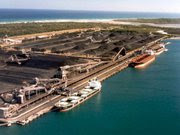
Reuters citing potential buyers reported that Brazilian mining company Vale SA is looking to sell its Colombian coal mine and Rio Cordoba port.
Vale acquired the assets in April 2009 for USD 306 million and is looking to unload them as it views the assets as small and high-cost mines. A sales process began more than a month ago and a banker has been appointed by Vale.
A Vale spokesman said the company does not comment on rumors.
(sourced from Reuters)
Showing posts with label undeveloped coal assets for sale. Show all posts
Showing posts with label undeveloped coal assets for sale. Show all posts
Saturday, November 5, 2011


Monday, October 31, 2011
Shanxi makes bid for stake in Pike River Coal
Monday, October31, 2011
Giant Chinese state-owned Shanxi Coal is understood to be in the running to buy Pike River Coal as part of a joint bid with New Zealand coal company Solid Energy.
Bids closed a week ago, with four players making offers, sources said.
One Indian company earlier interested in making an offer had pulled out, but another Indian company was still understood to be in the running, they said.
There has also been interest from an unnamed Australian company, but it remained unclear if it made a final bid.
Rumours have been around for a couple of weeks that a Chinese government agency was involved in a joint bid with Solid Energy for Pike.
Another industry source said if Shanxi joined Solid Energy as a partner in Pike River it could provide the financial muscle to reopen the mine and be a large customer, with Solid Energy providing the local expertise. China has a huge appetite for coal, which has been a key driver of its economic growth.
Chinese imports of coal have recently hit record levels, up 15 per cent in September to a record 19 million tonnes in a month.
There has been industry concern a Chinese or Indian company could come in with a high price and pick up the Pike River assets without the involvement of a local player.
The Pike mine remained a "technical challenge" and a player from overseas might not have the right skills to mine in what was a difficult area, a source said.
It would be surprising if the mine reopened within three to five years under new owners, sources said.
A joint-venture deal might also put Shanxi in a good position to take a stake in Solid Energy, should the Government decide to sell part of the company, an industry source said.
The Government says it plans to look at selling up to 49 per cent of three state-owned power companies, Solid Energy and reducing its holding in Air New Zealand should it be re-elected.
However, another source said a joint venture would not necessarily give Shanxi any advantage if part of Solid Energy were up for sale. Solid Energy already has a joint venture with international coal company Cargill, which bought 49 per cent of the Spring Creek underground coalmine near Greymouth four years ago.
Pike's receiver has declined to comment on the bidding.
Solid Energy has said it is interested in Pike, but it has refused to confirm or deny suggestions it will make a joint bid with a Chinese coal company.
The receivers want bidders to remain anonymous, given that a deal could be hampered if details are made public too soon.
Pike River collapsed into receivership almost a year ago, after a mine explosion that killed 29 men. It is expected the sale of the assets could take at least until Christmas to confirm, with foreign buyers facing Overseas Investment Office and other government approvals.
Ad Feedback
A price of about $50 million would clear Pike's debts, with anything above that potentially offering some return to Pike shareholders. The Pike field holds billions of dollars of coal.
In the past year, Solid Energy posted revenues of $829m, and made an after-tax profit of $87.2m, up 29 per cent.
Shanxi Coal's website says it aims to become a "super-large" enterprise group in the next five years with a target of producing 50 million tonnes of coal a year and to handle trade of 100 million tonnes as an import-export business. Shanxi province is southwest of Beijing.
The company runs 20 coalmines and has assets of more than 13 billion remnimbi (NZ$2.5 billion) and more than 7000 staff. Shanxi Coal is one of the top 10 state-owned businesses in the province. Annual revenues were about 22 billion remnimbi, with profits of more than 1 billion remnimbi.
sourced Stuff.co.nz
Giant Chinese state-owned Shanxi Coal is understood to be in the running to buy Pike River Coal as part of a joint bid with New Zealand coal company Solid Energy.
Bids closed a week ago, with four players making offers, sources said.
One Indian company earlier interested in making an offer had pulled out, but another Indian company was still understood to be in the running, they said.
There has also been interest from an unnamed Australian company, but it remained unclear if it made a final bid.
Rumours have been around for a couple of weeks that a Chinese government agency was involved in a joint bid with Solid Energy for Pike.
Another industry source said if Shanxi joined Solid Energy as a partner in Pike River it could provide the financial muscle to reopen the mine and be a large customer, with Solid Energy providing the local expertise. China has a huge appetite for coal, which has been a key driver of its economic growth.
Chinese imports of coal have recently hit record levels, up 15 per cent in September to a record 19 million tonnes in a month.
There has been industry concern a Chinese or Indian company could come in with a high price and pick up the Pike River assets without the involvement of a local player.
The Pike mine remained a "technical challenge" and a player from overseas might not have the right skills to mine in what was a difficult area, a source said.
It would be surprising if the mine reopened within three to five years under new owners, sources said.
A joint-venture deal might also put Shanxi in a good position to take a stake in Solid Energy, should the Government decide to sell part of the company, an industry source said.
The Government says it plans to look at selling up to 49 per cent of three state-owned power companies, Solid Energy and reducing its holding in Air New Zealand should it be re-elected.
However, another source said a joint venture would not necessarily give Shanxi any advantage if part of Solid Energy were up for sale. Solid Energy already has a joint venture with international coal company Cargill, which bought 49 per cent of the Spring Creek underground coalmine near Greymouth four years ago.
Pike's receiver has declined to comment on the bidding.
Solid Energy has said it is interested in Pike, but it has refused to confirm or deny suggestions it will make a joint bid with a Chinese coal company.
The receivers want bidders to remain anonymous, given that a deal could be hampered if details are made public too soon.
Pike River collapsed into receivership almost a year ago, after a mine explosion that killed 29 men. It is expected the sale of the assets could take at least until Christmas to confirm, with foreign buyers facing Overseas Investment Office and other government approvals.
Ad Feedback
A price of about $50 million would clear Pike's debts, with anything above that potentially offering some return to Pike shareholders. The Pike field holds billions of dollars of coal.
In the past year, Solid Energy posted revenues of $829m, and made an after-tax profit of $87.2m, up 29 per cent.
Shanxi Coal's website says it aims to become a "super-large" enterprise group in the next five years with a target of producing 50 million tonnes of coal a year and to handle trade of 100 million tonnes as an import-export business. Shanxi province is southwest of Beijing.
The company runs 20 coalmines and has assets of more than 13 billion remnimbi (NZ$2.5 billion) and more than 7000 staff. Shanxi Coal is one of the top 10 state-owned businesses in the province. Annual revenues were about 22 billion remnimbi, with profits of more than 1 billion remnimbi.
sourced Stuff.co.nz
Monday, February 21, 2011
Regulatory uncertainty puts investors off SA mine assets
Feb18, 2011
By Londiwe Buthelezi
Uncertainty about the regulatory framework and the outcome of the nationalisation debate is set to hinder mergers and acquisitions (M&As) in the local mining sector this year, compounding the outlook for the industry.
Investment analysts say the country is unlikely to see any jockeying by investors to plough money into deal making until there is clarity on key policy issues and power supply concerns are tackled.
Major mining companies, on the other hand, are increasingly considering disposals of non-strategic assets. That push partly reflects a bid by some companies to pare back some of the exposure to the risks now associated with the industry.
BHP Billiton Energy Coal South Africa is putting up some of its undeveloped coal assets for sale, and has invited tenders from parties interested in the assets.
Anglo American announced earlier this month that it had completed the sale of its Black Mountain Mining zinc interests in South Africa to Vedanta Resources for cash proceeds of $346 million (R2.5 billion).
Toby Mannock, the head of investment banking at Renaissance Capital, said asset disposals would be commonplace in 2011, if the investment climate was perceived to be increasingly risky, particularly to capital-intense, long-term projects.
He said international mining companies would undertake an extensive risk analysis when deciding to either acquire assets or dispose of interests in any geography.
“However, in South Africa, considerations will likely include technical mining risks like deep level mining, the rand’s volatility, local cost inflation and the political climate (for example, the nationalisation debate).”
Analysts say the country could lose out as investors are swayed by the emergence of new mineral wealth in the western parts of Africa.
Investment analysts say that, with other African countries increasingly revealing commodities in high demand, attention is gradually being diverted away from South Africa, which used to be the magnetic pole for investment in the continent’s mining sector.
South Africa has not seen a major deal in its mining sector since 2007, when Gold Fields acquired all the remaining Western Areas and the South Deep gold mine for R22.2bn.
According to a Zephyr report published by Bureau van Dijk, there were only 38 M&A transactions to the tune of e3.4bn (R33.5bn) in the South African mining sector last year, compared with 28 deals worth e2.71bn in 2009. In terms of value, the 2010 deals put South Africa in the bottom half of the top 10 biggest mining deals by value, behind Canada, Australia, Russia, China, US, Papua New Guinea and Brazil.
Rishon Chimboza, a senior consultant at pan-African investment consulting firm africapractice, said he expected a slowdown in mining M&As because shareholders did not appear to have much appetite to pursue major deals, with all the regulatory approval and price regulation they had to go through.
On the other hand, the picture is more encouraging for junior companies.
Percy Takunda, an analyst at Imara SP Reid, said: “In the junior platinum space there is always room for consolidation. But the problem is that they (junior companies) do not come widely discounted anymore.”
Peter Leon, a partner at Webber Wentzel, said the existence of regulatory uncertainty in the form of a more interventionist revised Mining Charter and the uncertainty around the proposed amendments to the Mineral and Petroleum Resources Development Act were some of the factors already pushing investors to look elsewhere.
This was not only detrimental to the M&A outlook but to investor confidence as well.
“The pending decision of the ANC with regard to mine nationalisation, coupled with the continuing difficulty that some foreign investors have in understanding and complying with black economic empowerment requirements, could hinder investment in the (local) mining industry,” he said.
Leon said clarity was necessary for investors to commit money in mining, particularly with its long lead times and massive capital expenditures. - (sourced:Business Report, www.iol.co.za)
Tags:high-vol (high volatility) met coal, political climate, Pan- African investment, Africanpractice, Mining Charter, technical mining risks, long-term projects, risk analysis, acquire assets,Anglo American Plc, Black Mountain Mining zinc, Renaissance Capital, capital-intense,
By Londiwe Buthelezi
Uncertainty about the regulatory framework and the outcome of the nationalisation debate is set to hinder mergers and acquisitions (M&As) in the local mining sector this year, compounding the outlook for the industry.
Investment analysts say the country is unlikely to see any jockeying by investors to plough money into deal making until there is clarity on key policy issues and power supply concerns are tackled.
Major mining companies, on the other hand, are increasingly considering disposals of non-strategic assets. That push partly reflects a bid by some companies to pare back some of the exposure to the risks now associated with the industry.
BHP Billiton Energy Coal South Africa is putting up some of its undeveloped coal assets for sale, and has invited tenders from parties interested in the assets.
Anglo American announced earlier this month that it had completed the sale of its Black Mountain Mining zinc interests in South Africa to Vedanta Resources for cash proceeds of $346 million (R2.5 billion).
Toby Mannock, the head of investment banking at Renaissance Capital, said asset disposals would be commonplace in 2011, if the investment climate was perceived to be increasingly risky, particularly to capital-intense, long-term projects.
He said international mining companies would undertake an extensive risk analysis when deciding to either acquire assets or dispose of interests in any geography.
“However, in South Africa, considerations will likely include technical mining risks like deep level mining, the rand’s volatility, local cost inflation and the political climate (for example, the nationalisation debate).”
Analysts say the country could lose out as investors are swayed by the emergence of new mineral wealth in the western parts of Africa.
Investment analysts say that, with other African countries increasingly revealing commodities in high demand, attention is gradually being diverted away from South Africa, which used to be the magnetic pole for investment in the continent’s mining sector.
South Africa has not seen a major deal in its mining sector since 2007, when Gold Fields acquired all the remaining Western Areas and the South Deep gold mine for R22.2bn.
According to a Zephyr report published by Bureau van Dijk, there were only 38 M&A transactions to the tune of e3.4bn (R33.5bn) in the South African mining sector last year, compared with 28 deals worth e2.71bn in 2009. In terms of value, the 2010 deals put South Africa in the bottom half of the top 10 biggest mining deals by value, behind Canada, Australia, Russia, China, US, Papua New Guinea and Brazil.
Rishon Chimboza, a senior consultant at pan-African investment consulting firm africapractice, said he expected a slowdown in mining M&As because shareholders did not appear to have much appetite to pursue major deals, with all the regulatory approval and price regulation they had to go through.
On the other hand, the picture is more encouraging for junior companies.
Percy Takunda, an analyst at Imara SP Reid, said: “In the junior platinum space there is always room for consolidation. But the problem is that they (junior companies) do not come widely discounted anymore.”
Peter Leon, a partner at Webber Wentzel, said the existence of regulatory uncertainty in the form of a more interventionist revised Mining Charter and the uncertainty around the proposed amendments to the Mineral and Petroleum Resources Development Act were some of the factors already pushing investors to look elsewhere.
This was not only detrimental to the M&A outlook but to investor confidence as well.
“The pending decision of the ANC with regard to mine nationalisation, coupled with the continuing difficulty that some foreign investors have in understanding and complying with black economic empowerment requirements, could hinder investment in the (local) mining industry,” he said.
Leon said clarity was necessary for investors to commit money in mining, particularly with its long lead times and massive capital expenditures. - (sourced:Business Report, www.iol.co.za)
Tags:high-vol (high volatility) met coal, political climate, Pan- African investment, Africanpractice, Mining Charter, technical mining risks, long-term projects, risk analysis, acquire assets,Anglo American Plc, Black Mountain Mining zinc, Renaissance Capital, capital-intense,
Subscribe to:
Posts (Atom)

 Posts
Posts