Needs to add 75,000 MW of power generation over the next five years
Monday, October31, 2011
I’ve said it over and over – economic growth requires a cheap source of home-grown energy.
It doesn’t matter what country we’re talking about. Without cheap energy, economic growth stagnates, plain and simple. If energy is expensive, transportation gets expensive, and the cost of goods gets expensive. Consumer spending slows, and economic growth stagnates.
India may be facing just such a problem… To continue its economic growth, which is running at about nine percent annually, India needs to add 75,000 MW of power generation over the next five years.
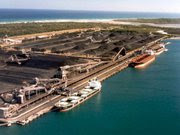
India burns coal to generate about half of its electricity. In 2011, it’ll import about 54 million tons to generate power.
Nearly 85 percent of new generation over the next five years is targeted to come from coal-burning plants. That translates into a 400-percent rise in coal imports – to about 213 million tons by 2016 or 2017.
This is particularly ironic in that India is sitting on 10 percent of the world’s coal reserves, or approximately 267 billion tons.
How can a country with such vast reserves of coal have to increase its imports four times in as many years? The short and simple answer is bad policy decisions on the part of the government.
Coal India, a state-run monster, is the country’s main coal producer. Its 2010 production was a stagnant 431 tons. It’s suffered from increased environmental hurdles, difficulty in obtaining land and lack of adequate investment by India’s central government.
India’s growing supply gap
The widening power generation gap is particularly acute in India. Its rising middle class is demanding more shopping malls and air-conditioned homes and offices. The peak-power deficit (the amount of power needed versus what can be supplied) grew to 12 percent last year.
It’s going to get worse, and that could have a stalling effect on the country’s economic growth. Remember what happened here when oil prices shot through the roof?
India’s demand for coal has made Coal India the second-most valuable company in the country. Its 2010 IPO raised a record $3.5 billion. But even with that kind of investment, it will struggle to meet even a fraction of India’s additional demand for coal.
A report published by India’s Central Electric Authority, remarked “The Ministry of Coal/Coal India need to be impressed upon to formulate a contingency plan to meet the demand of the power sector.”
The reality is that there is no contingency plan. Even if the government came up with one, nothing would change short term.
The bottom line is that India will be importing four times the amount of coal it does now in five years. Countries and companies who export coal to India can sell all they can produce.
The demand from both India and China will keep a floor under coal prices, and the stocks of companies that produce and export it. Consider any one of the large coal exporters as a great place to start investing in the coal sector.
ABOUT THE AUTHOR
David Fessler, Investment U
Since 1999, Investment U has provided impartial, no-nonsense investment advice on how to build long-lasting wealth. www.investmentu.com
(sourced StockHouse)
Showing posts with label economic expansion. Show all posts
Showing posts with label economic expansion. Show all posts
Monday, October 31, 2011


Monday, February 28, 2011
Taiwan 2010 growth at 24-year high, due to China
By Benjamin Yeh
Feb17, 2011
Taiwan said Thursday its economy grew 10.82 percent in 2010, its fastest rate for 24 years, fuelled by rapid expansion in the island's main trading partner China.
The data from the Directorate General of Budget, Accounting and Statistics is a slight improvement on the 10.47 percent growth initially announced last month and represents the strongest growth since 1986.
The directorate also revised growth in the final quarter of 2010 upwards to 6.92 percent from the previous estimate of 6.48 percent.
Economic expansion of 10.3 percent in the Chinese economy, now the world's second-largest, stoked mainland demand for Taiwanese-made products.
"China played a role in bringing about last year's stellar growth," said Antony Chang, an economist at Taipei's Shih Chien University.
"Increased demand from the mainland helped offset lost momentum from the United States and Europe."
The finance ministry said earlier that exports jumped 34.8 percent to $274.64 billion last year, with those to China and Kong Kong hitting a record $114.75 billion, or 41.8 percent of the overall figure.
The 2010 growth was made possible by the export sector's 25.59 percent increase, the highest since 1986 when it surged by 28.23 percent over the previous year, said Shih Su-mei, the head of the directorate.
"The export sector benefited from the continued filing of orders from multinational technology companies that have been continuously launching of consumer electronic products," she told reporters.
Also contributing to the better-than-expected economic performance was an active private sector, where investment soared 32.79 percent last year, the highest since 1965, Shih said.
However, the directorate said it expects Taiwan's economy to grow 4.92 percent in 2011, slightly slower than its initial 5.03 percent estimate.
"As the comparison base of last year becomes higher, we decided to lower the forecast figure for 2011," said Tsai Hung-kun, another official at the directorate.
In June last year, Taiwan and China signed the Economic Cooperation Framework Agreement, or ECFA, which is expected to help keep up economic momentum on the island in 2011.
"The positive influence of ECFA was just on the horizon last year, but its impact will become apparent this year," said Chang, the university economist.
"However, with Taiwan increasingly relying on the Chinese mainland for continued growth, political risk will increase as well."
The sweeping trade pact will contribute 0.4 percentage points of economic growth this year, the directorate said, citing figures from the island's top economic planning body the Council for Economic Planning and Development.
GDP per capita is forecast to hit a new high of $20,783 in 2011 while the consumer price index will rise a moderate 2.0 percent year-on-year, largely driven by rising food and energy prices.(sourced:AFP)
Feb17, 2011
Taiwan said Thursday its economy grew 10.82 percent in 2010, its fastest rate for 24 years, fuelled by rapid expansion in the island's main trading partner China.
The data from the Directorate General of Budget, Accounting and Statistics is a slight improvement on the 10.47 percent growth initially announced last month and represents the strongest growth since 1986.
The directorate also revised growth in the final quarter of 2010 upwards to 6.92 percent from the previous estimate of 6.48 percent.
Economic expansion of 10.3 percent in the Chinese economy, now the world's second-largest, stoked mainland demand for Taiwanese-made products.
"China played a role in bringing about last year's stellar growth," said Antony Chang, an economist at Taipei's Shih Chien University.
"Increased demand from the mainland helped offset lost momentum from the United States and Europe."
The finance ministry said earlier that exports jumped 34.8 percent to $274.64 billion last year, with those to China and Kong Kong hitting a record $114.75 billion, or 41.8 percent of the overall figure.
The 2010 growth was made possible by the export sector's 25.59 percent increase, the highest since 1986 when it surged by 28.23 percent over the previous year, said Shih Su-mei, the head of the directorate.
"The export sector benefited from the continued filing of orders from multinational technology companies that have been continuously launching of consumer electronic products," she told reporters.
Also contributing to the better-than-expected economic performance was an active private sector, where investment soared 32.79 percent last year, the highest since 1965, Shih said.
However, the directorate said it expects Taiwan's economy to grow 4.92 percent in 2011, slightly slower than its initial 5.03 percent estimate.
"As the comparison base of last year becomes higher, we decided to lower the forecast figure for 2011," said Tsai Hung-kun, another official at the directorate.
In June last year, Taiwan and China signed the Economic Cooperation Framework Agreement, or ECFA, which is expected to help keep up economic momentum on the island in 2011.
"The positive influence of ECFA was just on the horizon last year, but its impact will become apparent this year," said Chang, the university economist.
"However, with Taiwan increasingly relying on the Chinese mainland for continued growth, political risk will increase as well."
The sweeping trade pact will contribute 0.4 percentage points of economic growth this year, the directorate said, citing figures from the island's top economic planning body the Council for Economic Planning and Development.
GDP per capita is forecast to hit a new high of $20,783 in 2011 while the consumer price index will rise a moderate 2.0 percent year-on-year, largely driven by rising food and energy prices.(sourced:AFP)
Subscribe to:
Posts (Atom)

 Posts
Posts