Thu Jun 9, 2011 4:12am GMT
* Noble offers A$0.50 a share for Territory Resources
* Territory board reviewing offer at Thursday meet
* Noble out bids Exxaro by 9 pct
* Shares jump to A$0.52 (Adds Territory reaction, updates share move)
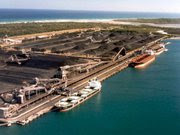
MELBOURNE, June 9 (Reuters) - Shares of Australian iron ore miner Territory Resources soared over 10 percent on Thursday after commodities firm Noble Group made a A$132.6 million ($140.8 million) bid, trumping an offer from South African miner Exxaro .
The offer of A$0.50 a share from Hong Kong-based Noble Group, which already owns 30 percent of Territory, is 9 percent better than Exxaro's bid and 6 percent above Territory's last closing price.
"By making this offer to secure our holding in Territory, we aim to ensure that its attention on growth will not in future run the risk of being deflected by any more opportunistic corporate actions," Noble said.
Territory Resources said the board would meet Thursday to review the offer and would later provide shareholders with further advice.
At 0410 GMT, its shares traded up 10.6 percent at A$0.52 per share.
Exxaro, one of South Africa's largest coal miners, launched its offer last month as part of a plan to buy several iron ore asset and eventually produce 10 million tonnes a year of the steel-making ingredient.
Analysts said Exxaro's bid, pitched at a 64 percent premium to Territory's share price at the time, was expensive given the short three-to-five-year life span of Territory's mine in Australia's Northern Territory.
Noble has appointed Investec broker to the offer. Exxaro is being advised by RMB Corporate Finance, a unit of South Africa's FristRand and Greenhill Caliburn. Azure Capital is advising Territory. ($1 = 0.942 Australian Dollars) (sourced Thomson Reuters)
Thursday, June 9, 2011


NMDC keen to bid for Hajigak mines in Afghanistan
Thursday, 09 Jun 2011
(Sourced from Indian Express)
State owned mining Maharatna National Mineral Development Corporation that is leading India’s consortium to get a resource foothold in Afghanistan, is keen to bid for the 1.8 billion tonne iron ore-rich Hajigak mines, but is against setting up a steel plant given the high capital costs and presence of cheaper producers in neighboring countries.
The company recently conducted extensive talks with the Hamid Karzai government in Afghanistan ahead of the bidding for the Hajigak mines.
A high level team of NMDC recently visited the mine, located 140 km west of Kabul in the Bamiyan province. It surveyed the area for a week beginning May 6. In its tour report, the company said exporting iron ore from Hajigak offered excellent prospects to Afghanistan’s neighboring markets in the Middle East.
The report said that “NMDC should continue to show interest in participating in the development of the Hajigak deposit through the bidding process and it should simultaneously strive for acquisition through the government allocation route.”
In pre tour talks with Afghan mines minister Wahidullah Shahrani, the company pressed for direct allocation of exploratory licence to NMDC on a government to government allocation basis, but the Afghan side indicated that it could do so only if the Indian government asked for it.
On the issue of setting up a steel plant, the team recommended that in view of the high capital costs involved in setting up a steel plant and the presence of low cost integrated steel producers in neighboring countries like Kazakhstan, Ukraine and Russia, setting up such a plant could amount to blocking of NMDC’s capital.
Interestingly, state-owned steel giant SAIL is interested in setting up a steel plant there for value addition and is understood to have accordingly briefed its administrative ministry.
The company recently conducted extensive talks with the Hamid Karzai government in Afghanistan ahead of the bidding for the Hajigak mines.
A high level team of NMDC recently visited the mine, located 140 km west of Kabul in the Bamiyan province. It surveyed the area for a week beginning May 6. In its tour report, the company said exporting iron ore from Hajigak offered excellent prospects to Afghanistan’s neighboring markets in the Middle East.
The report said that “NMDC should continue to show interest in participating in the development of the Hajigak deposit through the bidding process and it should simultaneously strive for acquisition through the government allocation route.”
In pre tour talks with Afghan mines minister Wahidullah Shahrani, the company pressed for direct allocation of exploratory licence to NMDC on a government to government allocation basis, but the Afghan side indicated that it could do so only if the Indian government asked for it.
On the issue of setting up a steel plant, the team recommended that in view of the high capital costs involved in setting up a steel plant and the presence of low cost integrated steel producers in neighboring countries like Kazakhstan, Ukraine and Russia, setting up such a plant could amount to blocking of NMDC’s capital.
Interestingly, state-owned steel giant SAIL is interested in setting up a steel plant there for value addition and is understood to have accordingly briefed its administrative ministry.
(Sourced from Indian Express)
Villagers oppose JSPL CTL plant in Angul
Thursday, 09 Jun 2011
TNN reported that tesidents of four gram Panchayats in Angul district have strongly protested the setting up of a proposed coal to liquid plant at Durgapur village by Jindal Steel and Power Limited.
Opposing the move, people, including women, under the banner of Krushaka and Krushi Jami Surakshya Samiti from four gram panchayats demonstrated before the district collectorate here at Angul on Friday. The villagers also took out a massive rally in Angul town. They submitted a memorandum to the chief minister and the President of India to look into the matter.
Mr Satrughana Sahoo a resident of Durgapur village said that "The Angul-Talcher region has already been enlisted as the seventh most critically polluted region in the country. The environment of the region will be more polluted if the CTL project starts.”
Mr Sahoo added that "After declaring it as one of the most critically polluted areas, the Union ministry of environment and forest (MOEF) had recently imposed a moratorium on further industrialization of the area, and directed the state pollution control board to prepare an action plan.
The CTL Plant will affect people of 15 to 20 villages. The company will acquire 4,000 acres of private land. It will also use 90 cusecs of water from river Mahanadi.
CTL is a process of coal liquefaction that allows coal to be utilized as an alternative to oil and Jindal Symflex, a subsidiary of Jindal will execute the project using German Lurgi technologies at an investment of INR 42,000 crore. The project is scheduled to complete in six years and would produce 80,000 barrels of diesel and other petroleum products in a day. (sourced from TOI)
Iron Ore-Spot extends gains, limited high-grade supply
Thu Jun 9, 2011 4:16am GMT
* Monsoon rains, high freight rates curbing Indian supply
* Chinese mills replenishing ore inventories
* Iron ore indexes rise for second day
By Manolo Serapio Jr
* Monsoon rains, high freight rates curbing Indian supply
* Chinese mills replenishing ore inventories
* Iron ore indexes rise for second day
By Manolo Serapio Jr
SINGAPORE, June 9 (Reuters) - Spot iron ore prices edged up on Thursday, extending recent gains, as Chinese steel mills continued to restock and with high-grade Indian material in tight supply as monsoon rains hamper shipments.
"We are getting more inquiries from mills who have low inventory levels of iron ore. There is also a shortage of high-grade material at the moment because supply from the Indian side is still tight," said a shipping manager for an iron ore trading firm in Shanghai.
Indian ore with 63.5 percent iron content was offered at $177-$179 a tonne, including freight, on Thursday, up from $175-$178 the previous day, said Chinese consultancy Umetal.
Australian 62 percent Newman fines were quoted at $175-$177 a tonne, also up from the previous day's $174-$176, Umetal said.
Apart from monsoon rains which make it difficult for iron ore to be shipped from Indian ports, other logistical problems have slowed movement of iron ore from the world's No. 3 supplier of the steelmaking ingredient.
"Railway freight rates are too high so exporters are preferring to transport their cargo via road which has limitations. Also, Karnataka is yet to start dispatches," said Dhruv Goel, managing partner at iron ore trader Steelmint in India's eastern Orissa state.
Indian Railways had hiked iron ore freight rates at least twice this year as prices of the raw material soared due to booming demand from China. It also imposed a "busy season" charge on iron ore shipments from April 1 to June 30 and from Oct. 1 to March 31. [ID:nL3E7EU0UD]
And despite lifting a ban on iron ore shipments in April, India's Karnataka has yet to resume exports given the slow issuance of permits. [ID:nL3E7H619E]
Iron ore indexes, based on Chinese spot prices and which global miners use in setting quarterly contracts, rose for a second day on Wednesday after losing around 6 percent last month.
The Steel Index's 62 percent benchmark .IO62-CNI=SI rose a dollar to $171.70 and Platts own 62 percent index IODBZ00-PLT also climbed by a dollar to $173.75.
Metal Bulletin's similar gauge .IO62-CNO=MB ticked up 6 cents to $171.24.
Gains in iron ore prices may be short-lived if China's power shortages worsen such that steel mills may have to curb output, analysts said.
"It's not yet widespread but the risks are there going forward. If some of the small to medium-sized steel mills facing power supply problems cut their steel production that will affect iron ore demand," said Judy Zhu, commodity analyst at Standard Chartered Bank in Shanghai.
"But even if we see spot prices fall from current levels because of weaker demand as we enter the third quarter, the traditional off-peak season, the downside risk is very limited because supply is still very tight."
Prices of nearby forward swaps retreated on Wednesday after recent steep gains, although losses were modest.
The Singapore Exchange-cleared June contract dropped 92 cents to $172.83 a tonne, July slipped 70 cents to $172.42 and August was off 4 cents at $171.83.
(Reporting by Manolo Serapio Jr.; Editing by Ed Lane, sourced Thomson Reuters)
"We are getting more inquiries from mills who have low inventory levels of iron ore. There is also a shortage of high-grade material at the moment because supply from the Indian side is still tight," said a shipping manager for an iron ore trading firm in Shanghai.
Indian ore with 63.5 percent iron content was offered at $177-$179 a tonne, including freight, on Thursday, up from $175-$178 the previous day, said Chinese consultancy Umetal.
Australian 62 percent Newman fines were quoted at $175-$177 a tonne, also up from the previous day's $174-$176, Umetal said.
Apart from monsoon rains which make it difficult for iron ore to be shipped from Indian ports, other logistical problems have slowed movement of iron ore from the world's No. 3 supplier of the steelmaking ingredient.
"Railway freight rates are too high so exporters are preferring to transport their cargo via road which has limitations. Also, Karnataka is yet to start dispatches," said Dhruv Goel, managing partner at iron ore trader Steelmint in India's eastern Orissa state.
Indian Railways had hiked iron ore freight rates at least twice this year as prices of the raw material soared due to booming demand from China. It also imposed a "busy season" charge on iron ore shipments from April 1 to June 30 and from Oct. 1 to March 31. [ID:nL3E7EU0UD]
And despite lifting a ban on iron ore shipments in April, India's Karnataka has yet to resume exports given the slow issuance of permits. [ID:nL3E7H619E]
Iron ore indexes, based on Chinese spot prices and which global miners use in setting quarterly contracts, rose for a second day on Wednesday after losing around 6 percent last month.
The Steel Index's 62 percent benchmark .IO62-CNI=SI rose a dollar to $171.70 and Platts own 62 percent index IODBZ00-PLT also climbed by a dollar to $173.75.
Metal Bulletin's similar gauge .IO62-CNO=MB ticked up 6 cents to $171.24.
Gains in iron ore prices may be short-lived if China's power shortages worsen such that steel mills may have to curb output, analysts said.
"It's not yet widespread but the risks are there going forward. If some of the small to medium-sized steel mills facing power supply problems cut their steel production that will affect iron ore demand," said Judy Zhu, commodity analyst at Standard Chartered Bank in Shanghai.
"But even if we see spot prices fall from current levels because of weaker demand as we enter the third quarter, the traditional off-peak season, the downside risk is very limited because supply is still very tight."
Prices of nearby forward swaps retreated on Wednesday after recent steep gains, although losses were modest.
The Singapore Exchange-cleared June contract dropped 92 cents to $172.83 a tonne, July slipped 70 cents to $172.42 and August was off 4 cents at $171.83.
Steel companies with pellet plants to get priority in iron-ore mine allocation - Report
Thursday, 09 Jun 2011
ET reported that the Indian government will give priority in iron ore mine allocation to steel companies that build pellet plants, as an incentive to prompt more companies to invest in ore improving facilities.
A senior official in the mines ministry said that the government's plan is to encourage steel plants that are building pellet plants units that remove moisture from ores, clean the mineral baking it into tight little balls to be used as more efficient feed in steelmaking.
The official said that "A pelletization push will create a domestic market for iron ore fines that have either been stockpiled for decades or been exported by the million of tonnes.”
Many steelmakers and miners are already setting up plants with capacities ranging from 2 million tonnes to 12 million tonnes. SAIL will build a 4 million tonnes pellet plant each at the mine heads in Gua, and Bolangir in Orissa, and also has plans for a 2 million tonnes plant in Bhilai. Jindal Steel already has a 4.5 million tonnes pellet plant running in Barbil, Orissa, which in its second phase will expand to 10 million tonnes. Trading major Stemcor's Indian subsidiary, Brahmani River, expects its 4 million tonnes pellet plant in Orissa to become operational in a few months. Essar is setting up a 12 million tonnes plant near Paradeep. (sourced from ET)
Wednesday, June 8, 2011
Gindalbie signs 10 year iron ore pact with QR National
Wednesday, 08 Jun 2011
Australian iron ore producer Gindalbie Metals and QR National have chalked up a 10 year rail haulage deal worth AUD 900 million for up to 10 million tonnes per annum.
Starting January 2012, QR National subsidiary Australia Western Railroad will transport up to 10 million tonnes per annum of magnetite concentrate and hematite direct shipping ore for Gindalbie’s joint venture company Karara Mining Limited.
Under the deal, QR National Freight will invest in excess of AUD 200 million in new locomotives, wagons and upgraded administration and maintenance facilities at the Narngulu East Facility near Geraldton. Once ramp up is completed, rail haulage services will involve four trains per day with 100 wagons per train.
Gindalbie Metals said that the agreement represents a key component of the long term logistics solution for its Karara Iron Ore Project in Western Australia. (sourced from supplychainreview)
Starting January 2012, QR National subsidiary Australia Western Railroad will transport up to 10 million tonnes per annum of magnetite concentrate and hematite direct shipping ore for Gindalbie’s joint venture company Karara Mining Limited.
Under the deal, QR National Freight will invest in excess of AUD 200 million in new locomotives, wagons and upgraded administration and maintenance facilities at the Narngulu East Facility near Geraldton. Once ramp up is completed, rail haulage services will involve four trains per day with 100 wagons per train.
Gindalbie Metals said that the agreement represents a key component of the long term logistics solution for its Karara Iron Ore Project in Western Australia. (sourced from supplychainreview)
China starts Inner Mongolia trial for herder death
Wed Jun 8, 2011 8:13am GMT
BEIJING, June 8 (Reuters) - A court in China's vast northern region of Inner Mongolia began hearing a homicide case against two men accused of killing an ethnic Mongolian herder, state media said on Wednesday, an incident that set off days of rare protests.
The death of Mergen, who had been protesting against pollution caused by a nearby coal mine, sparked wider demonstrations by ethnic minority Mongolians for better protection of their rights and traditions.
Beijing, ever worried by threats to stability, is now trying to address some of the protesters' broader concerns about the damage caused by coal mining to traditional grazing lands.
State news agency Xinhua said that coal truck driver Li Lindong and co-driver Lu Xiangdong were facing charges of intentional homicide at the court in Xilinhot.
The report said that the opening day was attended by about 160 people, including relatives of Mergen, who like many of China's ethnic Mongolians goes by only one name. Repeated telephone calls to Mergen's family members did not go through.
"The Mongol herder Mergen, together with 20 others, attempted to block the path of Li Lindong's coal truck, in protest against the noise and dust created by the coal trucks day and night near his village," Xinhua said.
"According to police, the truck dragged Mergen for 145 metres and subsequently killed him," said the English-language report.
Telephone calls to the courthouse seeking comment went unanswered and there was no indication of when there might be a verdict.
A tough sentence, such as the death penalty, could be given to show the government takes seriously the concerns of the ethnic Mongolians and to help nip in the bud any further unrest.
Xinhua said local residents were "still fuming" over Mergen's death, but that his wife, Uzhina, has been satisfied with the government's response to the case.
"I hope that the court can, in accordance with the law, hand down severe punishments for the culprits," Xinhua quoted here as saying.
Ethnic Mongolians, who make up less than 20 percent of the roughly 24 million population of Inner Mongolia, have complained that their traditional grazing lands have been ruined by mining and desertification, and that the government has tried to force them to settle in permanent houses.
The authorities have since launched a month-long overhaul of the lucrative coal mining industry, vowing to clean up or close polluters to ease public anger over Mergen's death.
Inner Mongolia, which covers more than a 10th of China's land mass, is supposed to enjoy a high degree of self-rule, but Mongolians say the Han Chinese majority run the show and have been the main beneficiaries of economic development.
China's Mongolians rarely take to the streets, unlike Tibetans or Xinjiang's Uighurs, making the recent protests highly unusual. (Reporting by Ben Blanchard; Editing by Ken Wills and Alex Richardson, sourced Thomson Reuters)
BEIJING, June 8 (Reuters) - A court in China's vast northern region of Inner Mongolia began hearing a homicide case against two men accused of killing an ethnic Mongolian herder, state media said on Wednesday, an incident that set off days of rare protests.
The death of Mergen, who had been protesting against pollution caused by a nearby coal mine, sparked wider demonstrations by ethnic minority Mongolians for better protection of their rights and traditions.
Beijing, ever worried by threats to stability, is now trying to address some of the protesters' broader concerns about the damage caused by coal mining to traditional grazing lands.
State news agency Xinhua said that coal truck driver Li Lindong and co-driver Lu Xiangdong were facing charges of intentional homicide at the court in Xilinhot.
The report said that the opening day was attended by about 160 people, including relatives of Mergen, who like many of China's ethnic Mongolians goes by only one name. Repeated telephone calls to Mergen's family members did not go through.
"The Mongol herder Mergen, together with 20 others, attempted to block the path of Li Lindong's coal truck, in protest against the noise and dust created by the coal trucks day and night near his village," Xinhua said.
"According to police, the truck dragged Mergen for 145 metres and subsequently killed him," said the English-language report.
Telephone calls to the courthouse seeking comment went unanswered and there was no indication of when there might be a verdict.
A tough sentence, such as the death penalty, could be given to show the government takes seriously the concerns of the ethnic Mongolians and to help nip in the bud any further unrest.
Xinhua said local residents were "still fuming" over Mergen's death, but that his wife, Uzhina, has been satisfied with the government's response to the case.
"I hope that the court can, in accordance with the law, hand down severe punishments for the culprits," Xinhua quoted here as saying.
Ethnic Mongolians, who make up less than 20 percent of the roughly 24 million population of Inner Mongolia, have complained that their traditional grazing lands have been ruined by mining and desertification, and that the government has tried to force them to settle in permanent houses.
The authorities have since launched a month-long overhaul of the lucrative coal mining industry, vowing to clean up or close polluters to ease public anger over Mergen's death.
Inner Mongolia, which covers more than a 10th of China's land mass, is supposed to enjoy a high degree of self-rule, but Mongolians say the Han Chinese majority run the show and have been the main beneficiaries of economic development.
China's Mongolians rarely take to the streets, unlike Tibetans or Xinjiang's Uighurs, making the recent protests highly unusual. (Reporting by Ben Blanchard; Editing by Ken Wills and Alex Richardson, sourced Thomson Reuters)
Brazil iron ore exports in January to April up slightly
Wednesday, 08 Jun 2011
There has been a marginal 2.4% increase in Brazil's iron ore exports this year with shipments lifted to 95.5 million tonnes.
In terms of where the iron ore is going there has been a further small incremental shift away from Europe towards the Far East.
To quantify this a year ago Europe took 21% of cargoes this year the total is down to 19% for China the proportion this year has increased from 48% to 49% while for other Asia the proportion has increased from 21.8% to 22.6% so the clear implication from all of this is that tonne miles are increasing faster than trade alone because of the longer-haul distance of shipping to the far east rather than Europe. (sourced from ICAP Shipping)
In terms of where the iron ore is going there has been a further small incremental shift away from Europe towards the Far East.
To quantify this a year ago Europe took 21% of cargoes this year the total is down to 19% for China the proportion this year has increased from 48% to 49% while for other Asia the proportion has increased from 21.8% to 22.6% so the clear implication from all of this is that tonne miles are increasing faster than trade alone because of the longer-haul distance of shipping to the far east rather than Europe. (sourced from ICAP Shipping)
Richards Bay Coal exports down by 22pct in May on rail repairs
Wednesday, 08 Jun 2011
Shipments from Richards Bay Coal Terminal, Africa’s largest export terminal for the fuel, fell 22% in May from a year earlier after railway maintenance work and a decline in coal prices.
As per report, the terminal shipped 3.57 million tonnes compared with 4.57 million tonnes a year earlier and 4.81 million tonnes in the previous month. Stocks rose to 4.41 million tonnes at the end of May from 3.63 million tonnes in April.
State owned Transnet Limited is carrying out maintenance on its Richards Bay railroad line the main feed to the terminal on South Africa’s east coast, from May 23rd to June 11th 2011.
According to data by Hampshire based IHS McCloskey, Terminal owners including Anglo American Plc, BHP Billiton Limited and Xstrata Plc saw coal prices decline 1.6% to average USD 121.29 per tonne in May from USD 123.25 in April.
RBCT received 4.41 million tonnes in May when 560 trains delivered coal. The terminal shipped 63.4 million tonnes in 2010 when it finished an expansion of capacity to 91 million tonnes.(sourced from Bloomberg)
Shipments from Richards Bay Coal Terminal, Africa’s largest export terminal for the fuel, fell 22% in May from a year earlier after railway maintenance work and a decline in coal prices.
As per report, the terminal shipped 3.57 million tonnes compared with 4.57 million tonnes a year earlier and 4.81 million tonnes in the previous month. Stocks rose to 4.41 million tonnes at the end of May from 3.63 million tonnes in April.
State owned Transnet Limited is carrying out maintenance on its Richards Bay railroad line the main feed to the terminal on South Africa’s east coast, from May 23rd to June 11th 2011.
According to data by Hampshire based IHS McCloskey, Terminal owners including Anglo American Plc, BHP Billiton Limited and Xstrata Plc saw coal prices decline 1.6% to average USD 121.29 per tonne in May from USD 123.25 in April.
RBCT received 4.41 million tonnes in May when 560 trains delivered coal. The terminal shipped 63.4 million tonnes in 2010 when it finished an expansion of capacity to 91 million tonnes.(sourced from Bloomberg)
Iron Ore-Prices rise as Chinese steel mills restock
Wed Jun 8, 2011 7:52am GMT
* Forward iron ore swaps extend gains
* Price rise seen short-lived on China power curbs, tightening
* China daily steel output drops in late May
By Manolo Serapio Jr
SINGAPORE, June 8 (Reuters) - Spot iron ore prices rose on Wednesday, as Chinese steelmakers replenished inventories that have run low after a record pace of steel production until mid-May.
A drop in spot prices to two-month lows last week encouraged mills in China, the world's top iron ore consumer, to restock.
"We expect the restocking to continue for the next two weeks. Iron ore prices are low, inventories are low and steel prices are good," said an iron ore trader in Rizhao city in China's Shandong province.
Indian ore with 63.5 percent iron content was quoted at $179-$181 a tonne, including freight, up from $175-$178 on Tuesday, traders said, and market indications are for prices to be firm to stable in the next few weeks.
Global miner BHP Billiton sold 80,000 tonnes of 61.2 percent-grade iron ore fines at $171 a tonne and another 90,000 tonnes of 57.7 percent grade at $158 a tonne at a tender on Tuesday, traders said.
The price for the higher-grade fines was in line with spot market rates, while the lower-grade ore was $3-$5 higher than readily available stocks at Chinese ports, traders said.
"I think the Chinese will not be restocking too much iron ore because of the power shortages which may hit steel production and the tighter monetary policy," said a trader in Shenzhen.
"Also, steel demand usually slows during the summer when construction mostly stops because it becomes too hot to build anything."
China is struggling with its worst power shortages in seven years and has raised electricity prices for some users for the first time since 2009.
China's daily crude steel output in the last 11 days of May stood at 1.915 million tonnes, down 3.5 percent compared with the previous 10 days when daily production rose to a record of 1.984 million tonnes as mills maximised output ahead of a widely anticipated power rationing campaign.
Shanghai rebar futures closed up 0.1 percent at 4,869 yuan per tonne on Wednesday, rebounding from a low of 4,830 yuan hit earlier, its weakest in nearly two weeks.
Iron ore indexes, based on Chinese spot prices and which global miners use in setting quarterly contracts, rose on Tuesday after losing around 6 percent last month.
Platts 62 percent benchmark IODBZ00-PLT rose $1.00 to $172.75 a tonne and a similar index by Metal Bulletin .IO62-CNO=MB gained 88 cents to $171.18.
The Steel Index's 62 percent gauge .IO62-CNI=SI edged up 50 cents to $170.70.
"Despite the fact that prices have been coming down for a while now, we shouldn't forget that prices are still high; the spot price has not been below $160 per tonne for more than six months and it is unlikely to do so in the short-to-medium term at least," said Christopher Ellis, index analyst with Metal Bulletin in London.
Forward swaps extended gains, suggesting investors are looking to more gains in spot prices.
The Singapore Exchange-cleared June contract rose 75 cents to $173.75 a tonne, July gained $1.95 to $173.12 and August climbed $1.87 to $171.87.
Tight supply from India, the world's No. 3 iron ore supplier, is also expected to support prices, with shipments seen falling through the monsoon season that lasts till September.
Iron ore exports from India's Mormugao port fell 11.8 percent to 8.2 million tonnes in April-May largely due to a sharp rise in export taxes and softer demand from China, a trend likely to continue in coming months when monsoon rains hit shipments. (Editing by Himani Sarkar, sourced Thomson Reuters)
* Forward iron ore swaps extend gains
* Price rise seen short-lived on China power curbs, tightening
* China daily steel output drops in late May
By Manolo Serapio Jr
SINGAPORE, June 8 (Reuters) - Spot iron ore prices rose on Wednesday, as Chinese steelmakers replenished inventories that have run low after a record pace of steel production until mid-May.
A drop in spot prices to two-month lows last week encouraged mills in China, the world's top iron ore consumer, to restock.
"We expect the restocking to continue for the next two weeks. Iron ore prices are low, inventories are low and steel prices are good," said an iron ore trader in Rizhao city in China's Shandong province.
Indian ore with 63.5 percent iron content was quoted at $179-$181 a tonne, including freight, up from $175-$178 on Tuesday, traders said, and market indications are for prices to be firm to stable in the next few weeks.
Global miner BHP Billiton sold 80,000 tonnes of 61.2 percent-grade iron ore fines at $171 a tonne and another 90,000 tonnes of 57.7 percent grade at $158 a tonne at a tender on Tuesday, traders said.
The price for the higher-grade fines was in line with spot market rates, while the lower-grade ore was $3-$5 higher than readily available stocks at Chinese ports, traders said.
"I think the Chinese will not be restocking too much iron ore because of the power shortages which may hit steel production and the tighter monetary policy," said a trader in Shenzhen.
"Also, steel demand usually slows during the summer when construction mostly stops because it becomes too hot to build anything."
China is struggling with its worst power shortages in seven years and has raised electricity prices for some users for the first time since 2009.
China's daily crude steel output in the last 11 days of May stood at 1.915 million tonnes, down 3.5 percent compared with the previous 10 days when daily production rose to a record of 1.984 million tonnes as mills maximised output ahead of a widely anticipated power rationing campaign.
Shanghai rebar futures closed up 0.1 percent at 4,869 yuan per tonne on Wednesday, rebounding from a low of 4,830 yuan hit earlier, its weakest in nearly two weeks.
Iron ore indexes, based on Chinese spot prices and which global miners use in setting quarterly contracts, rose on Tuesday after losing around 6 percent last month.
Platts 62 percent benchmark IODBZ00-PLT rose $1.00 to $172.75 a tonne and a similar index by Metal Bulletin .IO62-CNO=MB gained 88 cents to $171.18.
The Steel Index's 62 percent gauge .IO62-CNI=SI edged up 50 cents to $170.70.
"Despite the fact that prices have been coming down for a while now, we shouldn't forget that prices are still high; the spot price has not been below $160 per tonne for more than six months and it is unlikely to do so in the short-to-medium term at least," said Christopher Ellis, index analyst with Metal Bulletin in London.
Forward swaps extended gains, suggesting investors are looking to more gains in spot prices.
The Singapore Exchange-cleared June contract rose 75 cents to $173.75 a tonne, July gained $1.95 to $173.12 and August climbed $1.87 to $171.87.
Tight supply from India, the world's No. 3 iron ore supplier, is also expected to support prices, with shipments seen falling through the monsoon season that lasts till September.
Iron ore exports from India's Mormugao port fell 11.8 percent to 8.2 million tonnes in April-May largely due to a sharp rise in export taxes and softer demand from China, a trend likely to continue in coming months when monsoon rains hit shipments. (Editing by Himani Sarkar, sourced Thomson Reuters)
China's Meijin in 12-18 month Australia coal mine study
Wed Jun 8, 2011 8:03am GMT
* Mine study could lead to development of big Australian coal mine
* Study by local arm of China's Meijin Energy to take 12-18 months
By James Regan
* Mine study could lead to development of big Australian coal mine
* Study by local arm of China's Meijin Energy to take 12-18 months
By James Regan
SYDNEY, June 8 (Reuters) - Meijin Energy of China will spend the next year to 18 months preparing a feasibility study that could lead to development of one of Australia's largest coal mines by the middle of the decade, a company official said on Wednesday.
Meijin, which has been exploring coal prospects in Queensland state's Galilee Basin on land it acquired in 2006 so far has managed to measure around 3.7 billion tonnes of thermal coal and expects that figure to grow as more pre-development work is conducted, the official of the Australian unit of Meijin told Reuters.
"We still have more work to do, so I would assume it will be updated to a larger figure," said the official, who asked not to be named in accordance with his company's policy.
The mine could export between 30 million and 60 tonnes of coal a year starting in three or four years.
Australia this year is forecast to mine 217 million tonnes of thermal coal, according to the Australian Bureau of Agricultural and Resource Economics and Sciences.
He confirmed that the project must also take into account infrastructure requirements, such as roads, rail lines and available port routes before proceeding but said that process was being helped by the arrival of a handful of well-heeled prospectors in the remote Galilee basin facing similar needs.
These include Australian mining magnates Clive Palmer and Gina Rinehart, Vale of Brazil and India's Adani .
Adani has already submitted an expression of interest to build two new coal terminals in Queensland. [ID:nL3E7H11VS]
Meijin is privately-owned by Chinese billionaire Yao Junliang and operates in Australia under the name Macmines AustAsia.
Even before the arrival of the new handful of mega-projects, Australian thermal coal production was tipped to rise. Between 2012 and 2016, Australia's thermal coal exports are forecast to grow at an average annual rate of 11 percent to reach 242 million tonnes. (Editing by Ed Davies)
Meijin, which has been exploring coal prospects in Queensland state's Galilee Basin on land it acquired in 2006 so far has managed to measure around 3.7 billion tonnes of thermal coal and expects that figure to grow as more pre-development work is conducted, the official of the Australian unit of Meijin told Reuters.
"We still have more work to do, so I would assume it will be updated to a larger figure," said the official, who asked not to be named in accordance with his company's policy.
The mine could export between 30 million and 60 tonnes of coal a year starting in three or four years.
Australia this year is forecast to mine 217 million tonnes of thermal coal, according to the Australian Bureau of Agricultural and Resource Economics and Sciences.
He confirmed that the project must also take into account infrastructure requirements, such as roads, rail lines and available port routes before proceeding but said that process was being helped by the arrival of a handful of well-heeled prospectors in the remote Galilee basin facing similar needs.
These include Australian mining magnates Clive Palmer and Gina Rinehart, Vale of Brazil and India's Adani .
Adani has already submitted an expression of interest to build two new coal terminals in Queensland. [ID:nL3E7H11VS]
Meijin is privately-owned by Chinese billionaire Yao Junliang and operates in Australia under the name Macmines AustAsia.
Even before the arrival of the new handful of mega-projects, Australian thermal coal production was tipped to rise. Between 2012 and 2016, Australia's thermal coal exports are forecast to grow at an average annual rate of 11 percent to reach 242 million tonnes. (Editing by Ed Davies)
Eagle Mining buys into Inner Mongolian firm
Wednesday, 08 Jun 2011
Xiamen Eagle Mining plans to buy 70% equity of Inner Mongolia Keshiketeng Banner Fengchi Mining Company Limited through a capital increase.
Eagle Mining plans to pay CNY 1.11 billion to the former shareholders and pay an additional CNY 45.4 million towards a capital increase.
The registered capital of Fengchi Mining would be CNY 22 million. The CNY 30 million premiums will be the capital reserve of the company. (sourced capitalvue)
Xiamen Eagle Mining plans to buy 70% equity of Inner Mongolia Keshiketeng Banner Fengchi Mining Company Limited through a capital increase.
Eagle Mining plans to pay CNY 1.11 billion to the former shareholders and pay an additional CNY 45.4 million towards a capital increase.
The registered capital of Fengchi Mining would be CNY 22 million. The CNY 30 million premiums will be the capital reserve of the company. (sourced capitalvue)
JSW Jaigarh Port achieves coal discharge record
Wednesday, 08 Jun 2011
JSW Jaigarh Port Limited has set an all India record by discharging 71,740 tonnes of steam coal in the first 24 hours from the Panamax vessel MV Marina.
JSW Jaigarh Port Limited has set an all India record by discharging 71,740 tonnes of steam coal in the first 24 hours from the Panamax vessel MV Marina.
The vessel, which berthed on May 31, carried a total parcel size of 83,909 tonnes of South African coal. The discharge rate achieved in the first 24 hours was 71,740 tonnes and the overall rate of 61,386 tonnes PWWD was achieved for the complete discharge of the vessel. This was the highest rate of discharge achieved by an Indian port.
The port has a dedicated berth with fully mechanized facility for handling bulk cargo and a coal stockyard with capacity to store 0.7 million tonnes at any given time. The present draught of 14 meters makes it the deepest private port on the Maharashtra coast.
JSW Jaigarh Port Limited a subsidiary of JSW Infrastructure Limited has set up Greenfield multi cargo deep water port in Damankhol Bay, Jaigarh, Ratnagiri District of Maharashtra. It endeavors to be the port of choice for all its customers in Maharashtra and Northern Karnataka.
The port has been developed and operated on 50 year concession from the Maharashtra government on BOOST basis. It presently has 2 berths and in the next phase of development, is initiating the construction of liquid handling, LNG, ro ro and container terminals. The Master Plan for the port envisages capacity of 50 million tonnes per annum.
Plans are also underway to increase draught to 18 meters for accommodating Capesize vessels of 180,000 DWT. Rail and road connectivity is being enhanced simultaneously to enable quick and cost effective receipt and delivery of cargo.(sourced from Bhandarkarpub)
The port has a dedicated berth with fully mechanized facility for handling bulk cargo and a coal stockyard with capacity to store 0.7 million tonnes at any given time. The present draught of 14 meters makes it the deepest private port on the Maharashtra coast.
JSW Jaigarh Port Limited a subsidiary of JSW Infrastructure Limited has set up Greenfield multi cargo deep water port in Damankhol Bay, Jaigarh, Ratnagiri District of Maharashtra. It endeavors to be the port of choice for all its customers in Maharashtra and Northern Karnataka.
The port has been developed and operated on 50 year concession from the Maharashtra government on BOOST basis. It presently has 2 berths and in the next phase of development, is initiating the construction of liquid handling, LNG, ro ro and container terminals. The Master Plan for the port envisages capacity of 50 million tonnes per annum.
Plans are also underway to increase draught to 18 meters for accommodating Capesize vessels of 180,000 DWT. Rail and road connectivity is being enhanced simultaneously to enable quick and cost effective receipt and delivery of cargo.(sourced from Bhandarkarpub)
Coal India to take 12 million tonnes hit on latest green directive
Wednesday, 08 Jun 2011
ET reported that Coal India's annual output would fall by 11.5 million tonnes this fiscal because of a recent order from the environment ministry that requires a company to obtain forest clearances before mining even in barren areas if another part of the coal block has a forest.
Mr Sriprakash Jaiswal coal minister of India said that the directive has begun to impact existing and future projects.
He said “We are writing to Planning Commission deputy chairman Mr Montek Singh Ahluwalia, finance and environment ministers to exempt coal projects from the recent directive. The latest instructions of environment ministry will have an adverse impact on coal production as most of the coal bearing areas are in forests.” (sourced from Economic Times)
Mr Sriprakash Jaiswal coal minister of India said that the directive has begun to impact existing and future projects.
He said “We are writing to Planning Commission deputy chairman Mr Montek Singh Ahluwalia, finance and environment ministers to exempt coal projects from the recent directive. The latest instructions of environment ministry will have an adverse impact on coal production as most of the coal bearing areas are in forests.” (sourced from Economic Times)
Mr Navin Jindal on Bolivia visit to push JSPL plans
Wednesday, 08 Jun 2011
FE reported that Mr Navin Jindal is on a week long visit to Bolivia to give a push to his plans of investing USD 2.1 billion in the next few years in mining and setting up an integrated 1.7 million tonne per annum steel plant, 6 million tonne per annum sponge iron plant, a 10 million tonne per annum iron ore pellet plant and 450 MW power plant in the South American nation.
With development rights for 20 billion tonne of El Mutun Iron Ore Reserves in Bolivia, Jindal Steel & Power plans to invest more in the country.
An Indian diplomat said that Indian engineers here are passionate about making steel and are determined to overcome technical and logistical challenges and are also training the local people and interacting with them in Spanish with lot of enthusiasm.
Company officials said that this will be the largest investment by an Indian company in South America and also the largest investment by a foreign company in a single project in Bolivia.
The project is expected to generate employment for thousands of people while also catalyzing economic growth for the Republic of Bolivia. The company has already secured land to start the project and expects to start exporting iron ore shortly. With the commercial dispatch of iron ore likely to commence soon in Bolivia, the company will start construction soon on the DRI, pelletization and steel projects. These are expected to become operational in the next 3 to 4 years.
The direct reduction plant will be the largest single module facility in the world and the Ultra Mega Mod DRI will produce both hot direct reduction iron and hot briquetted iron for a newly proposed Greenfield meltshop. Jindal Steel will provide its own iron ore and iron pellets from its El Mutun iron ore reserves. This is Jindal’s third DRI plant built in the last two years.
The company built a 1.8 million tonne coal gasification plant in Orissa and 1.5 million tonne gas based HBI plant at Sohar Industrial Port area of Sohar, Oman. JSPL is reaching out to the global market with a range of investment strategies. The company continues to capitalize on opportunities in high growth markets expanding its core areas and diversifying into new businesses. (sourced from FinancialExpress)
With development rights for 20 billion tonne of El Mutun Iron Ore Reserves in Bolivia, Jindal Steel & Power plans to invest more in the country.
An Indian diplomat said that Indian engineers here are passionate about making steel and are determined to overcome technical and logistical challenges and are also training the local people and interacting with them in Spanish with lot of enthusiasm.
Company officials said that this will be the largest investment by an Indian company in South America and also the largest investment by a foreign company in a single project in Bolivia.
The project is expected to generate employment for thousands of people while also catalyzing economic growth for the Republic of Bolivia. The company has already secured land to start the project and expects to start exporting iron ore shortly. With the commercial dispatch of iron ore likely to commence soon in Bolivia, the company will start construction soon on the DRI, pelletization and steel projects. These are expected to become operational in the next 3 to 4 years.
The direct reduction plant will be the largest single module facility in the world and the Ultra Mega Mod DRI will produce both hot direct reduction iron and hot briquetted iron for a newly proposed Greenfield meltshop. Jindal Steel will provide its own iron ore and iron pellets from its El Mutun iron ore reserves. This is Jindal’s third DRI plant built in the last two years.
The company built a 1.8 million tonne coal gasification plant in Orissa and 1.5 million tonne gas based HBI plant at Sohar Industrial Port area of Sohar, Oman. JSPL is reaching out to the global market with a range of investment strategies. The company continues to capitalize on opportunities in high growth markets expanding its core areas and diversifying into new businesses. (sourced from FinancialExpress)
Subscribe to:
Posts (Atom)

 Posts
Posts